
You Slipped and Fell – But Can You Prove They Knew?
After a fall on someone else’s property, you’re dealing with pain, medical bills, and missed work. The property owner claims they had no idea about the hazard that caused your injury. But here’s what many people don’t realize: under Illinois law, property owners can be held responsible not just for what they actually knew, but also for what they should have known. Whether you slipped on a wet floor in a Chicago grocery store or tripped over a broken sidewalk, proving the owner’s knowledge of the dangerous condition is critical to your claim.
The challenge is that property owners rarely admit they knew about hazards. They’ll deny any knowledge of the spilled liquid, broken handrail, or icy walkway that caused your fall. Understanding how to establish their knowledge – whether actual or constructive – can make the difference between recovering fair compensation and walking away empty-handed.
💡 Pro Tip: Take photos of the exact hazard that caused your fall immediately, if possible. Document the surrounding area too – maintenance equipment nearby, warning signs (or lack thereof), and lighting conditions can all help prove how long the hazard existed.
Seize the opportunity to hold negligent property owners accountable with the support of 844SeeMike (PI). Pick up the phone and call us at 312-786-4442 or simply contact us online. Your journey to justice starts with us—don’t wait!
Illinois Law: What Property Owners Must Know and When
Under Illinois premises liability law, property owners must maintain reasonably safe conditions for visitors. To hold them legally responsible for your injuries, you need to prove one of three things: they caused the hazardous condition, they knew about it but failed to fix it, or they should have known about it because a reasonable person would have discovered and addressed it. This last point about constructive knowledge often becomes the key battleground in slip and fall cases.
Common dangerous conditions that trigger liability include uneven surfaces from cracks or breaks in pavement, loose materials like gravel or sand, wet or icy walkways, stairs that don’t meet building code requirements, torn carpets, water accumulations, spilled liquids on floors, blocked aisles, missing railings, and items hanging from shelves. Every state and virtually every county has building codes that must be followed by property owners, and violations of these codes can help establish negligence.
When it comes to proving slip and fall fault, evidence is everything. Prior incident reports documenting earlier problems with the same condition, maintenance records showing attempts to address the hazard, government inspection reports recording safety violations, surveillance footage showing how long the condition existed, witness testimony, emails or texts indicating awareness of the danger, and expert testimony can all establish what the property owner knew and when they knew it.
💡 Pro Tip: Request incident reports from the property immediately after your fall. Many businesses have internal policies requiring hazard documentation, and these records can disappear if you wait too long to request them.
Building Your Case: The Timeline That Matters
Time is critical in proving property owner knowledge. The longer a hazard exists, the stronger your argument that they should have discovered it through reasonable inspection. Understanding this timeline helps your slip and fall lawyer build a compelling case. Here’s how the process typically unfolds and what evidence matters at each stage:
- Immediate documentation: Photograph the hazard, get witness contacts, report to management, seek medical treatment – these actions within hours of your fall create the foundation of your case
- First 48 hours: Request surveillance footage before it’s overwritten (many systems auto-delete after 30-90 days), obtain incident reports, document your injuries with photos
- First week: Gather maintenance logs and inspection records – property owners often have daily or weekly inspection requirements that, if missed, prove negligence
- 30 days: Interview employees about inspection procedures, previous incidents, and when they last checked the area where you fell
- Discovery phase: Your attorney can subpoena emails showing complaints about the hazard, training records revealing inadequate safety protocols, and prior lawsuits involving similar conditions
According to the National Safety Council, falls account for over 8.9 million emergency room visits annually, with slips and falls representing a significant portion of these incidents. The Consumer Product Safety Commission reports that floor-related falls result in more than 2 million injuries each year, with retail environments and restaurants being particularly high-risk locations. These statistics underscore why property owners must maintain vigilant inspection procedures and why establishing their knowledge of hazardous conditions is so critical to successful premises liability claims.
💡 Pro Tip: Keep a detailed journal starting immediately after your fall. Document not just your injuries, but also any comments made by employees or managers about the hazard – statements like “we’ve been meaning to fix that” can be powerful evidence of prior knowledge.
From Evidence to Compensation: How 844SeeMike Can Prove Property Owner Knowledge
Successfully proving property owner knowledge requires more than just showing a hazard existed. You need an experienced slip and fall lawyer who understands how to uncover hidden evidence and counter the property owner’s defenses. At 844SeeMike, we know exactly where to look for proof of actual or constructive knowledge. We immediately send preservation letters to prevent destruction of surveillance footage, request all maintenance and inspection logs, interview employees who might have known about the hazard, and work with experts who can determine how long a substance was on the floor before your fall.
Property owners will argue the hazard was “open and obvious,” claim you were distracted or wearing inappropriate footwear, or insist they had no reasonable opportunity to discover the danger. We counter these defenses by demonstrating their inspection procedures were inadequate, showing similar incidents that put them on notice, and proving the hazard existed long enough that reasonable care would have discovered it. Our approach has helped countless Illinois residents recover compensation for medical bills, lost wages, pain and suffering, and other damages resulting from preventable falls.
💡 Pro Tip: Don’t give a recorded statement to the property owner’s insurance company before speaking with an attorney. They’re looking for ways to shift blame to you or minimize their client’s knowledge of the hazard.
Actual vs. Constructive Notice: Understanding the Difference
Property owners can be held liable through actual notice (they definitely knew) or constructive notice (they should have known). Actual notice is straightforward – the owner or employees created the hazard, received complaints about it, or were directly told about the danger. Constructive notice is more complex but equally valid under Illinois law. It applies when a hazard exists for such a length of time that reasonable care would have discovered it.
Proving Actual Notice in Illinois Slip and Fall Cases
Actual notice is the gold standard for slip and fall cases. When property owners or their employees created the danger, that alone proves actual knowledge. Beyond that, look for prior complaints documented in writing, maintenance records showing previous repairs to the same area, testimony from employees who reported the hazard, or surveillance showing staff walking past the danger without addressing it. The recent Neisendorf v. Abbey Paving & Sealcoating Co. (2024) decision reminds us that control over property conditions matters – the court found that limited contractual rights weren’t enough to establish the duty required for liability.
💡 Pro Tip: Check online reviews and social media for complaints about the same hazard. A pattern of customer complaints about icy walkways or wet floors can establish the owner’s actual knowledge of recurring dangerous conditions.
The “Reasonable Inspection” Standard in Illinois
Illinois law doesn’t require property owners to keep their premises perfectly safe, but it does require reasonable efforts to discover and fix dangers. What’s “reasonable” depends on the type of property, expected visitor traffic, and the nature of business operations. A busy grocery store should inspect high-traffic areas more frequently than a rarely-used warehouse.
Industry Standards That Define Reasonable Care
Different businesses have different inspection requirements. Retail stores typically should conduct hourly floor walks in customer areas, restaurants must check for spills near drink stations every 15-30 minutes, and apartment buildings need regular inspection of common areas like stairwells and lobbies. When property owners fail to meet these industry standards, it becomes easier to prove they should have known about hazards. Your slip and fall attorney can obtain these industry guidelines and use them to demonstrate the property owner’s negligence in your case.
💡 Pro Tip: Ask employees about their inspection schedules and whether they use logs or checklists. Missing entries or patterns of skipped inspections can prove the owner’s failure to maintain reasonable safety standards.
Frequently Asked Questions
Common Questions About Proving Property Owner Knowledge
Understanding how to prove a property owner knew or should have known about a hazard is crucial to your Illinois slip and fall case. Here are answers to the questions we hear most often from injury victims.
💡 Pro Tip: Write down everything you remember about your fall while details are fresh – the color and consistency of any liquid, the exact location, weather conditions, and what employees said can all help establish how long the hazard existed.
Next Steps in Your Slip and Fall Case
Once you understand the importance of proving property owner knowledge, you’ll want to know what happens next. The legal process can seem overwhelming, but knowing what to expect helps you make informed decisions about your case.
💡 Pro Tip: Keep all receipts related to your fall – medical bills, pharmacy costs, transportation to appointments, and even replacement clothing if yours was damaged. This documentation supports your damage claim.
1. How long does a spill need to be on the floor before a store can be held liable in Illinois?
There’s no specific time requirement in Illinois law. Courts consider factors like the type and size of the spill, foot traffic in the area, and the store’s inspection procedures. A large puddle in a busy aisle might establish constructive notice in 10-15 minutes, while a small water droplet in a corner might need to exist much longer. Your slip and fall lawyer can work with experts to analyze the specific circumstances of your fall.
2. What if the property owner claims they inspected the area just before my fall?
Property owners often claim recent inspections, but these claims require proof. Your attorney can request inspection logs, time-stamped signatures, and surveillance footage to verify when inspections actually occurred. If they can’t produce this documentation, or if the records appear altered, it undermines their defense and supports your Illinois slip and fall lawsuit.
3. Can I still win my case if the hazard was partially visible?
Yes, even partially visible hazards can create liability. Illinois law considers many factors beyond visibility, including lighting conditions, distractions in the environment, whether the hazard was expected in that location, and whether the owner failed to use reasonable warnings. The “open and obvious” defense isn’t automatic – your IL slip and fall attorney can argue that the owner still had a duty to maintain safe conditions.
4. How do I prove the property owner should have known about ice on their walkway?
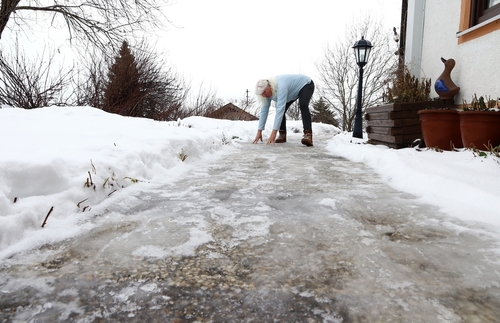
Weather records, temperature data, and precipitation timing help establish how long ice existed. Property owners in Illinois know that freezing temperatures after rain or snow create dangerous conditions. If they failed to salt, sand, or clear walkways within a reasonable time after weather events, they can be held liable. Industry standards and local ordinances often specify required response times for weather-related hazards.
5. What happens if the property owner destroys surveillance footage of my fall?
Destruction of evidence can seriously harm the property owner’s defense. Illinois courts can issue “spoliation” instructions, telling juries they may assume the destroyed evidence would have been unfavorable to the property owner. This is why contacting a slip and fall attorney quickly is crucial – we send preservation letters immediately to prevent evidence destruction.
Work with a Trusted Slip and Fall Lawyer
Proving property owner knowledge requires swift action and experienced legal guidance. At 844SeeMike, we understand the tactics property owners use to avoid responsibility and know how to counter them effectively. Our team immediately investigates your fall, preserves critical evidence, and builds a strong case showing what the property owner knew or should have known about the hazard. Don’t let the property owner’s denials prevent you from getting the compensation you deserve. Call us today at 312-786-4442 for a free consultation about your Illinois slip and fall case. We’ll review your situation, explain your rights, and fight to hold negligent property owners accountable for their failure to maintain safe premises.
Secure the justice you deserve with 844SeeMike (PI) by your side. Don’t let negligent property owners off the hook—reach out today by calling 312-786-4442 or simply contact us. Your path to fair compensation starts with a simple call!