Key Takeaways
- Your own policy pays when the driver vanishes. Every auto liability policy issued in Illinois must include uninsured motorist coverage for people hurt by hit-and-run vehicles, at no less than $25,000 per person and $50,000 per crash (215 ILCS 5/143a).
- Hit-and-runs are common, not rare. In 2025, 4,107 of the 17,902 Chicago crashes with an injury (22.9%) were hit-and-runs. When a pedestrian was struck, the driver fled in 40.4% of injury crashes.
- Fleeing an injury crash is a felony. A driver who leaves the scene of a crash that injures or kills someone commits a Class 4 felony, rising to a Class 2 or Class 1 felony if the driver also fails to report it within half an hour (625 ILCS 5/11-401).
- Pedestrians and cyclists have one more source. The Illinois Crime Victims Compensation Program can reimburse up to $45,000 in out-of-pocket losses, but only if police were told within 72 hours and only after insurance has paid.
- The clock starts at the crash, not the arrest. A claim against a driver who is later identified generally must be filed within 2 years (735 ILCS 5/13-202), and your policy’s own notice terms can be much shorter, so report the crash and the claim right away.
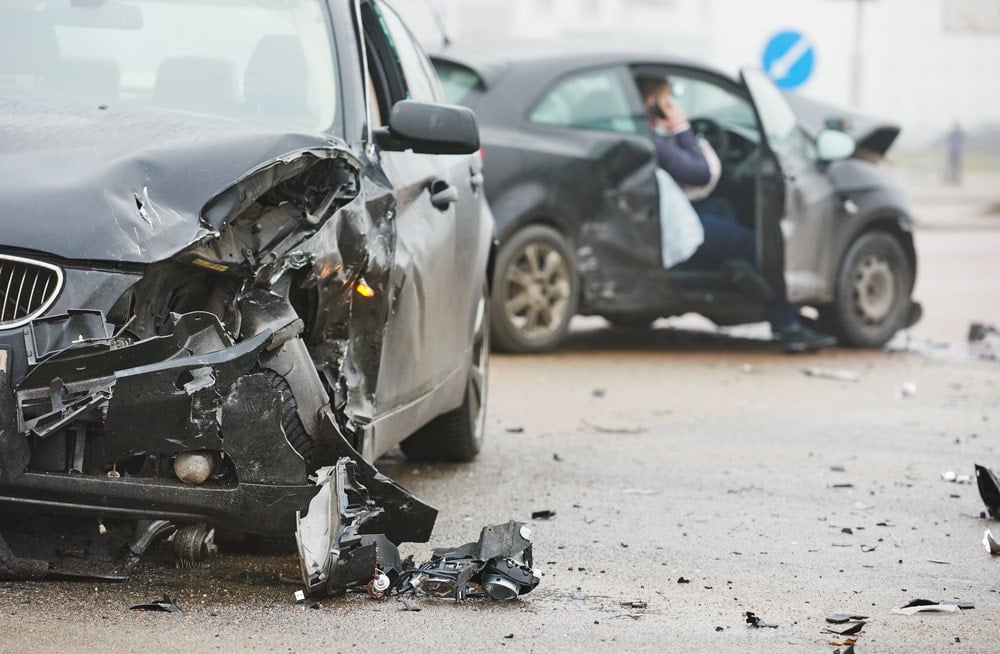
A hit-and-run leaves you with injuries, bills and no one to send them to. The driver is gone, there may be no license plate, and the police may never make an arrest. Many people assume that means there is no claim. In Illinois, that is usually wrong.
This guide explains who pays after a hit-and-run in Illinois, what to do in the first hours and days, how uninsured motorist coverage works when the driver is never found, what happens if police do find the driver, and the separate state fund that can help injured pedestrians and bicyclists. Every rule below comes from the Illinois statutes themselves, linked in the sources at the end.
Who Pays After a Hit and Run in Illinois?
If the driver who hit you is never identified, your own auto insurance usually pays for your injuries through its uninsured motorist (UM) coverage. Illinois law requires every auto liability policy issued in the state to include UM coverage for people insured under the policy who are hurt by “uninsured motor vehicles and hit-and-run motor vehicles,” in limits of at least $25,000 per person and $50,000 per crash. Health insurance and any medical payments coverage on your policy can pay medical bills along the way. If police do find the driver, you can also claim against that driver and their insurer. Pedestrians and bicyclists may qualify for the state’s Crime Victims Compensation Program as well.
What to Do After a Hit and Run
The first hours decide how much evidence exists. In order:
- Call 911 and stay at the scene if you safely can. When a crash injures anyone, every driver involved must notify the police by the fastest available means if no officer is present (625 ILCS 5/11-407). A prompt report also protects your eligibility for the insurance and state programs below.
- Get medical care the same day. Some injuries, including concussions and internal injuries, are not obvious at the scene. Your medical records become the backbone of the claim.
- Write down everything about the other vehicle. Even a partial plate, the color, make, damage, and direction it went can be enough for police to find it. Note the exact time and location.
- Find witnesses and video. Get names and phone numbers from anyone who stopped. Ask nearby businesses and homes about security and doorbell cameras quickly, because many systems record over old footage automatically.
- Photograph the scene, your injuries and any vehicle damage. Paint transfer and broken parts left at the scene can help identify the vehicle.
- Tell your own insurance company in writing. Say it was a hit-and-run and that you are making an uninsured motorist claim. Read your policy’s notice and proof-of-claim terms, which are often stricter than the statute of limitations.
- Get the crash report. It records what the officer found, including whether the crash was coded as a hit-and-run. Our guide to Illinois crash report codes explains how to read it, and how long you have to report an accident in Illinois covers getting a copy.
How Uninsured Motorist Coverage Pays for a Hit and Run
The rule comes from Section 143a of the Illinois Insurance Code. It forbids insurers from issuing or renewing an auto liability policy in Illinois unless it covers insured people “legally entitled to recover damages from owners or operators of uninsured motor vehicles and hit-and-run motor vehicles because of bodily injury, sickness or disease, including death.” In plain terms: you step into the shoes of someone suing the driver who fled, and your own insurer stands in for that driver.
Five things about that coverage matter after a hit-and-run:
- The minimum is low. The required limit is the same as Illinois’ minimum liability limit in 625 ILCS 5/7-203: $25,000 for one person and $50,000 for everyone hurt in one crash. Many policies carry more, so check your declarations page.
- It covers injuries, including pain and suffering. Because UM coverage pays what you could have recovered from the driver, it reaches medical bills, lost wages and the human losses, not just out-of-pocket costs.
- Limits on different cars do not stack. Section 143a says the UM limits for different vehicles may not be added together to raise the total available for one person in one crash.
- Disputes go to arbitration, not a jury. Every Illinois policy must send disputes about UM coverage and the amount of damages to arbitration. You and the insurer can each pick an arbitrator, who then pick a third, or the case goes to the American Arbitration Association.
- Your car is a separate question. Uninsured motorist property damage coverage does not pay if the hit-and-run driver cannot be identified (215 ILCS 5/143a(2)), so damage to the car usually goes through collision coverage.
Who counts as “insured” depends on your policy’s definitions. Many policies cover the named insured and relatives living in the same household even when they are hit as pedestrians or bicyclists, and passengers are usually covered under the policy on the car they were riding in. Some policies also define a hit-and-run vehicle narrowly, for example by requiring that it actually struck you or your car. Read those definitions before you assume a claim is or is not covered. Our guide to uninsured and underinsured motorist coverage in Illinois covers the coverage in more depth.
| Source | What it can pay | Limits and conditions |
|---|---|---|
| Your uninsured motorist coverage | Medical bills, lost wages, pain and suffering | At least $25,000 per person and $50,000 per crash; disputes go to arbitration (215 ILCS 5/143a) |
| The driver and their insurer, if found | Full damages under Illinois law | Generally 2 years to sue (735 ILCS 5/13-202); limited by the driver’s coverage |
| Your underinsured motorist coverage | Part of the gap when the driver is found but underinsured | Depends on your limits and the driver’s coverage |
| Health insurance or medical payments coverage | Medical bills as they come in | Plan or policy terms |
| Crime Victims Compensation | Out-of-pocket losses only, no pain and suffering | Up to $45,000; pedestrians and bicyclists; pays after insurance (740 ILCS 45) |
If a hospital or doctor treats you and waits to be paid, it may claim a lien on a later settlement. Illinois caps those liens, as explained in our guide to medical liens on a settlement.
What Happens If Police Find the Driver?
Then you have a claim against the driver and the driver’s liability insurer, the same as after any crash caused by someone else. If the driver had no insurance, your uninsured motorist coverage still applies. If the driver’s insurance is too small for your losses, your underinsured motorist coverage may pay part of the difference, depending on your limits and the driver’s.
The driver also faces criminal charges. Under 625 ILCS 5/11-401, a driver in a crash that injures or kills anyone must stop, stay at the scene, give their name, address, registration number and the vehicle owner’s name (11-403), and help anyone hurt. The penalties:
- Leaving the scene of an injury or fatal crash: a Class 4 felony.
- Also failing to report it at a police station or sheriff’s office within half an hour: a Class 2 felony, or a Class 1 felony if someone died.
- Leaving the scene when only a driven or attended vehicle was damaged: a Class A misdemeanor (625 ILCS 5/11-402).
- Driver’s license: the Secretary of State must revoke the driving privileges of anyone convicted under Section 11-401.
A criminal conviction does not pay your damages by itself. A criminal court can order restitution for some losses, but restitution is not the same as compensation for an injury, as our article on the differences between compensation and restitution explains. Your civil claim runs on its own track, and its deadline keeps running while the criminal case is pending.
Crime Victims Compensation for Hit-and-Run Pedestrians and Bicyclists
Illinois treats certain hit-and-runs as violent crimes for its Crime Victims Compensation Program, run by the Illinois Attorney General with claims decided by the Court of Claims. The Act lists a violation of Section 11-401 as a covered crime “provided the victim was a pedestrian or was operating a vehicle moved solely by human power or a mobility device at the time of contact.” That covers people on foot, on a bicycle or in a wheelchair. A person in a car hit by a fleeing driver is not covered by that listing, although the Act separately lists driving under the influence, which can apply if the driver turns out to have been impaired.
The program is useful when someone has no auto policy in the household, or when bills outrun the coverage. Its rules, from 740 ILCS 45:
- Maximum award: $45,000 per victim for crimes on or after August 7, 2022 ($27,000 before that date).
- Police notice: law enforcement must have been notified within 72 hours of the crime, although late notice can be excused if it was timely under the circumstances.
- Application deadline: within 5 years of the crime, or within 1 year after someone is charged with it.
- It pays last. You must first use health insurance, auto coverage, workers’ compensation and similar benefits, and the award is reduced by what they pay.
- What it covers: medical and hospital bills, counseling, lost earnings (figured on net earnings capped at $2,400 per month), towing and storage up to $1,000, and funeral costs up to $10,000. It does not pay for pain and suffering or property damage.
- Cooperation: you must cooperate with law enforcement in finding and prosecuting the driver.
For more on rights on foot and on a bike, see our Illinois pedestrian accident laws and claims guide and our guide to e-bike accident claims in Illinois.
Illinois Hit-and-Run Deadlines
| What | Deadline | Source |
|---|---|---|
| Driver who caused the crash must stop and stay | Immediately | 625 ILCS 5/11-401(a) |
| Driver who left must report to police | Within half an hour (or of hospital discharge) | 625 ILCS 5/11-401(b) |
| Any driver in an injury crash notifies police if none is present | Immediately, by the fastest available means | 625 ILCS 5/11-407 |
| Police notice for Crime Victims Compensation | Within 72 hours | 740 ILCS 45/6.1(b) |
| Notice of an uninsured motorist claim to your insurer | As your policy requires, usually promptly | Your policy |
| Lawsuit against an identified driver | Generally 2 years from the crash | 735 ILCS 5/13-202 |
| Crime Victims Compensation application | 5 years, or 1 year after a charge | 740 ILCS 45/6.1(a) |
If the hit-and-run vehicle turns out to belong to a city, county, the CTA or another public body, much shorter rules apply. See our guides to the Illinois Tort Immunity Act and the Illinois statute of limitations.
How Common Are Hit-and-Runs in Chicago?
The City of Chicago publishes every crash report filed by the Chicago Police Department, with a field marking hit-and-runs. For crashes dated in 2025:
- 32,880 of 109,117 reported crashes (30.1%) were hit-and-runs, most of them property damage only.
- 4,107 of the 17,902 crashes with at least one injury (22.9%) were hit-and-runs.
- When the first impact was with a pedestrian, the driver fled in 1,035 of 2,562 injury crashes (40.4%), the highest share of any common crash type.
- When the first impact was with a bicyclist, the driver fled in 494 of 1,772 injury crashes (27.9%).
- Of the 30 people killed in crashes where a pedestrian was struck first, 15 died in hit-and-runs.
Those figures cover Chicago Police Department reports only, which leave out most expressway crashes. They show why a hit-and-run is not an unusual event that insurance forgot about: it is one of the ordinary ways people are hurt on Chicago streets, and the coverage rules above exist for exactly that reason.
Talk to a Lawyer About a Hit-and-Run Claim
An uninsured motorist claim is a claim against your own insurer, but the insurer is not on your side of it. It will look at whether you gave notice on time, whether you fit the policy’s definition of an insured person, and what your injuries are worth, and any dispute goes to arbitration. Our hit-and-run accident lawyers handle these claims for injured drivers, passengers, pedestrians and bicyclists across Illinois.
We help people hurt in hit-and-runs throughout the state, including in Chicago, Joliet, Rockford, Elgin, Springfield, Naperville, Aurora, Elmhurst, Peoria and Decatur, and for drivers hurt in Champaign and across the state through our Illinois car accident lawyers.
Frequently Asked Questions
Does insurance cover a hit and run in Illinois?
Yes, for injuries. Every auto liability policy issued in Illinois must include uninsured motorist coverage that protects insured people hurt by hit-and-run vehicles, in limits of at least $25,000 per person and $50,000 per crash (215 ILCS 5/143a and 625 ILCS 5/7-203). You claim against your own policy, not the driver who fled. Damage to your car is different: Illinois uninsured motorist property damage coverage does not pay when the hit-and-run driver cannot be identified, so car damage usually goes through collision coverage.
Who pays my medical bills if the hit-and-run driver is never found?
Usually your own uninsured motorist coverage, plus your health insurance or any medical payments coverage on your policy. A pedestrian or bicyclist with no auto policy in the household may still qualify for the Illinois Crime Victims Compensation Program, which can reimburse up to $45,000 in out-of-pocket losses for crimes on or after August 7, 2022, after other insurance has paid.
How long do I have to report a hit and run in Illinois?
Immediately. When a crash injures anyone, every driver involved must notify the police by the fastest available means if no officer is at the scene (625 ILCS 5/11-407). The Crime Victims Compensation Act also requires police notice within 72 hours for that program, and auto policies generally require prompt notice of a hit-and-run claim. A quick report gives police the best chance of finding the driver while video and witnesses are still available.
Is a hit and run a felony in Illinois?
Yes, when someone is hurt or killed. Leaving the scene of a crash that causes personal injury or death is a Class 4 felony under 625 ILCS 5/11-401. A driver who also fails to report the crash at a police station within half an hour commits a Class 2 felony, or a Class 1 felony if someone died. Leaving the scene of a crash that only damages a vehicle is a Class A misdemeanor.
Does Illinois crime victims compensation cover hit-and-run victims?
It covers hit-and-run victims who were pedestrians, or who were riding a bicycle or other human-powered vehicle or using a mobility device, when they were struck (740 ILCS 45/2). Police must be notified within 72 hours, the application is due within 5 years of the crash, and the program pays only after insurance and other benefits. It reimburses expenses such as medical bills and lost wages, not pain and suffering.
Can I sue a hit-and-run driver in Illinois?
Yes, if the driver is identified. You can bring a personal injury claim against the driver and their insurer, and most such lawsuits must be filed within 2 years of the crash under 735 ILCS 5/13-202. A criminal case against the driver does not pay your damages by itself, so the civil claim matters even when the driver is charged.
What if the hit-and-run driver had no insurance or too little?
If the driver is found but has no insurance, your uninsured motorist coverage applies. If the driver has insurance that is too small for your losses, underinsured motorist coverage on your own policy may pay part of the difference, depending on your limits and the driver’s. Disputes about uninsured motorist coverage or the amount of damages go to arbitration under 215 ILCS 5/143a.
How common are hit and runs in Chicago?
Very common. In 2025, 4,107 of the 17,902 crashes with an injury reported by the Chicago Police Department (22.9%) were hit-and-runs. When a pedestrian was struck, the driver fled in 40.4% of injury crashes, and 15 of the 30 deaths in those pedestrian crashes came in hit-and-runs, according to the City of Chicago crash data.
Hurt by a Driver Who Fled?
We will put your uninsured motorist claim in on time, chase the evidence that identifies the driver, and fight the insurer for you.
No fee unless we win.
Sources
- Illinois Insurance Code, 215 ILCS 5/143a (uninsured and hit-and-run motor vehicle coverage, arbitration, uninsured motorist property damage).
- Illinois Vehicle Code, 625 ILCS 5: Sections 7-203 (minimum limits), 11-401 (crashes involving death or personal injury), 11-402 (crashes involving damage to a vehicle), 11-403 (duty to give information and render aid) and 11-407 (immediate notice of crash).
- Crime Victims Compensation Act, 740 ILCS 45: Sections 2 (definitions, including crime of violence and pecuniary loss), 6.1 (right to compensation, timing, notice and cooperation) and 10.1 (award of compensation and maximum award).
- Illinois Attorney General, Crime Victim Compensation.
- Code of Civil Procedure, 735 ILCS 5/13-202 (two-year limit for personal injury).
- City of Chicago Data Portal, Traffic Crashes – Crashes (Chicago Police Department E-Crash records), crashes dated January 1 to December 31, 2025, grouped by hit-and-run indicator and type of first crash. Retrieved October 22, 2026.
This article is general information about Illinois law, not legal advice, and reading it does not create an attorney-client relationship. Insurance policies differ, and your policy’s definitions and notice terms control your uninsured motorist claim. Deadlines depend on the facts of each case, so please speak with a lawyer about your own situation as soon as possible.