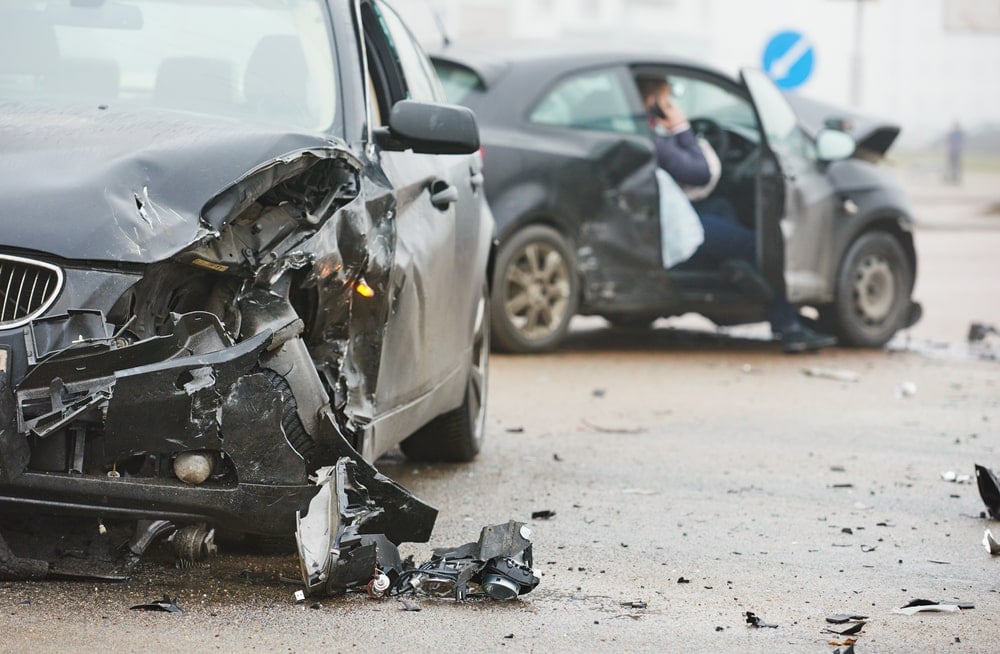
If another driver caused your crash in Illinois, that driver’s insurance is generally responsible for fixing your vehicle. If you were at fault, or fault is still in dispute, your own collision coverage usually pays and your insurer may chase reimbursement later. Because Illinois is an at-fault state for property damage, who pays comes down to who caused the wreck and what coverage is on each policy. At 844-SEE-MIKE, we guide people through this every day and are here to help when the insurance company makes it harder than it should be.
Understanding Liability in Car Accidents
Liability means figuring out who is legally responsible for the crash and the damage it caused. This matters because the driver found at fault is usually the one on the hook for repairs, a replacement vehicle, and other losses. Sometimes fault is obvious, like a rear-end collision at a stoplight. Other times it takes photos, witness statements, and the police report to sort out, and knowing how fault works helps you avoid unfair blame that could cost you money.

Fault and Liability
When a driver is at fault, it means a mistake on their part caused the crash, whether that was running a red light, following too closely, or looking at a phone. Illinois follows a fault-based system, so the driver who caused the wreck is generally responsible for the damage. You can read more about what Illinois fault-based car accident law means for victims and how it shapes a property damage claim.
Fault is not always all-or-nothing. Illinois uses modified comparative negligence, so more than one driver can share the blame, and the share assigned to you directly affects what you can recover.
How Insurance Companies Determine Liability
Once a claim is filed, the insurance company investigates to decide who caused the crash. Adjusters typically review the police report, examine photos from the scene, talk to people who saw what happened, and interview both drivers. They may also pull video from nearby cameras.
After that review, they assign fault, and that decision drives what the company is willing to pay. If the finding feels unfair, you are not required to accept it. At 844-SEE-MIKE, we look at every detail so your side is heard.
Insurance Coverage That Pays for Car Repairs
Every insurance policy is a little different, and the type of coverage in play decides which company pays. If the other driver caused the crash, their liability insurance may cover your repairs, since liability coverage pays for damage a driver causes to others, not to their own car.
There is a ceiling on that, and it is lower than most people assume. Illinois requires only $20,000 in property damage liability coverage per crash, alongside $25,000 per person and $50,000 per crash for bodily injury (625 ILCS 5/7-203). If the at-fault driver carries the state minimum and your vehicle is worth more than $20,000, their policy will not cover the full repair or replacement, and the gap has to come from your own coverage or from the driver personally.
If you were at fault, or you want your car fixed quickly while fault is still being sorted out, your own coverage steps in:
- Collision coverage pays for damage to your vehicle no matter who caused the crash, minus your deductible
- Comprehensive coverage applies when something other than a collision damages your car, like fire, theft, or a storm
- Uninsured or underinsured motorist property damage helps when the at-fault driver has no coverage or not enough, though it does not apply if that driver cannot be identified
Filing on your own collision coverage often pays faster. Your insurer can then seek reimbursement from the at-fault driver’s insurer through a process called subrogation, and if it succeeds you may get your deductible back. If the at-fault driver had no insurance, uninsured motorist coverage in Illinois may be what protects you.
Insurance companies do not always make it easy. They may push a quick settlement that does not cover the full cost of repairs. You are never required to take the first offer. At 844-SEE-MIKE, we review your situation carefully so you are not pressured into something unfair.
What Happens If You Share the Blame
Illinois uses modified comparative negligence for property damage and injury claims. If your share of the fault is more than 50%, you are barred from recovering from the other driver. If your share is 50% or less, you can still recover, but your compensation is reduced by your percentage of fault (735 ILCS 5/2-1116).
Say your repairs come to $10,000 and you are found 20% at fault. You could recover $8,000 from the at-fault driver’s insurer, with the remaining 20% falling to you or your own collision coverage. Because a few percentage points can change what lands in your pocket, it is worth pushing back when an insurer assigns you more blame than the facts support.
Diminished Value and Total Loss
Even a well-repaired car is often worth less on resale simply because it has an accident on its history. Illinois measures property damage by the loss in value, so the drop in market value that survives a proper repair can be pursued as part of a claim against the at-fault driver’s insurance. Insurers routinely dispute these claims and they need to be documented with an appraisal, and a diminished value claim against your own insurer under your own collision coverage is a different question that usually turns on your policy language. Our guide to a diminished value claim in Illinois walks through how to document it.
If the cost to repair is more than the car is worth, the insurer may call it a total loss and offer a settlement based on the vehicle’s pre-accident value. You can dispute a low valuation with maintenance records, recent upgrades, and comparable local listings. Either way, an insurer is generally only required to pay up to the value of your vehicle at the time of the crash.
Steps to Take After an Accident
Everything happens fast after a crash, but what you do in the first minutes can shape your claim and how much help you receive.
Check whether anyone needs medical attention, including yourself, then take photos of the scene and the damage and call the police so there is an official report. That report often becomes important later when fault and who pays are decided. Exchange insurance details, names, and phone numbers with the other driver, but do not admit fault or guess what happened, because what looks obvious at the scene sometimes changes once all the facts come out.
Report the crash to your own insurer as soon as you can, even if the other driver was at fault. If you need a rental while your car is in the shop, ask about rental reimbursement coverage. Not every policy includes it, but it can be a lifeline during a stressful stretch. Different crashes raise different repair questions, so it helps to understand the common types of car accidents and how each one affects a property damage claim.

How 844-SEE-MIKE Can Help
A crash can leave you dealing with far more than a damaged vehicle. In some cases, the damage does not even come from the collision itself, and you may need to sue a towing company for damaging your car if it was mishandled afterward.
Insurance can bring stress, confusion, and delay, especially when the other driver’s insurer is slow to respond. At 844-SEE-MIKE, we know how these companies operate and we do not let them take advantage of you. If you were also injured, our Illinois car accident lawyers can handle the property damage side of your case alongside your injury claim.
When we take a case, we go over every part of your policy and the other driver’s coverage, gather records, deal with the adjuster, and help you present a strong claim. Whether it is paying for repairs, recovering the value of a totaled car, or making sure the insurer treats you fairly, our job is to protect your interests. You pay nothing unless we recover money for you. This article is general information, not legal advice.
Frequently Asked Questions
Who pays for car repairs if the other driver was at fault in Illinois?
Because Illinois is a fault-based state, the at-fault driver’s liability insurance is generally responsible for your repairs, up to that policy’s property damage limit, which can be as low as the $20,000 state minimum. You can also file on your own collision coverage for a faster payment, and your insurer can seek reimbursement from the at-fault driver’s insurer through subrogation.
Will my insurance cover repairs if I was at fault?
Your liability coverage pays for the other party’s car, not your own. To fix your own vehicle when you are at fault, you generally need collision coverage, which pays regardless of fault after your deductible.
What if the at-fault driver has no insurance?
You may rely on your own collision coverage or uninsured or underinsured motorist property damage coverage, if you carry it. That property damage coverage does not apply where the at-fault driver cannot be identified, such as an unwitnessed hit-and-run. You will usually pay your deductible up front, though your insurer may recover it later.
Can I still recover if I was partly at fault?
Yes, as long as your share of the fault is 50% or less. Under Illinois law, your compensation is reduced by your percentage of fault, and you are barred from recovering only if you were more than 50% at fault (735 ILCS 5/2-1116).
How long do I have to file a property damage claim in Illinois?
Illinois generally gives you five years from the date of the crash to file a claim for damage to property, including your vehicle (735 ILCS 5/13-205). Two shorter deadlines can override that. Injury claims run two years (735 ILCS 5/13-202), and any claim against a city, county, transit agency, or other local public body, such as a crash with a municipal vehicle, must be filed within one year (745 ILCS 10/8-101).
Can I recover the lost value of my car after repairs?
Often, yes. In a claim against the at-fault driver’s insurance you can pursue the difference between your car’s value before the crash and its value after repairs, though insurers frequently dispute it and an appraisal helps. A diminished value claim against your own insurer depends on your policy language.
If the Crash Hurt You Too
If you were hurt in the crash, we will review your injury claim, the fault split and every policy that can pay for your treatment.
No fee unless we win.