Critical Steps Every Injured Motorcyclist in IL Should Take After a Crash
The moments after a motorcycle crash can feel overwhelming, but what you do in those first minutes and hours may shape your entire path to recovery. If you were hit by a car while riding in Illinois, your immediate actions affect both your health and your legal rights. From securing the scene to notifying law enforcement, each step builds the foundation for a potential motorcycle accident claim in Illinois. Understanding what Illinois law requires can make the difference between a strong case and a weakened one.
If you or a loved one has been injured in a motorcycle crash, the team at 844SeeMike (PI) is ready to help. Call 312-786-4442 or reach out online today.
Stay at the Scene and Fulfill Your Legal Obligations
Illinois law imposes strict duties on every driver involved in a crash that causes injury or death. Under 625 ILCS 5/11-401(a), drivers must immediately stop at the scene and remain until all requirements are fulfilled. This applies to motorcyclists and car drivers alike.
Leaving the scene carries severe criminal penalties. Failing to stop and remain at an injury crash scene is a Class 4 felony under 625 ILCS 5/11-401. If the driver fails to report to police within 30 minutes, the offense elevates to a Class 2 felony. If the accident results in death, that violation becomes a Class 1 felony. Conviction also triggers mandatory license revocation.
If a driver does leave, Illinois law requires them to report to police within 30 minutes, or within 30 minutes of hospital discharge if incapacitated. Drivers must also render reasonable assistance to injured persons and call for medical help when obviously necessary.
💡 Pro Tip: Even if the other driver flees, write down everything about their vehicle, make, model, color, and partial plate numbers. This becomes critical for law enforcement and your motorcycle accident attorney.
Report the Crash and Protect Your Right to Compensation
Notifying law enforcement promptly is not just good practice; it is a legal prerequisite for certain compensation claims in Illinois. Under the Illinois Crime Victims Compensation Act, 740 ILCS 45/6.1(b), if the crash involves a criminal act like a hit-and-run, the injured motorcyclist must notify law enforcement within 72 hours. Failure to meet this deadline can jeopardize a compensation claim, although the Attorney General may extend the timeframe if late notice was reasonable.
There is an important alternative for injured riders who cannot contact police immediately. Under 740 ILCS 45/6.1(b-1) and (b-2), a victim who presents to a medical facility for medical care can satisfy the notification requirement by providing information at the facility. This means seeking immediate medical care serves both your health and your legal standing.
💡 Pro Tip: Ask the hospital to document your arrival time, visit details, and injury nature. This serves as both proof of timely notification and evidence of your damages.
What If You File a Civil Lawsuit Instead?
Illinois law recognizes a narrow civil-suit alternative in limited circumstances. Under 740 ILCS 45/6.1(b-3), an applicant claiming that a law enforcement officer’s use of force caused injury or death may satisfy the notification requirement by: (1) complying with subsection (b) (standard law enforcement notification), (2) filing a complaint with the Illinois Law Enforcement Training Standards Board, (3) filing a lawsuit against a law enforcement officer or department, or (4) presenting evidence that the victim has obtained a settlement or a verdict in a civil suit; any application based on such a verdict must be filed within one year after resolution of the civil suit. This provision does not apply to motorcyclists filing civil suits against at-fault private drivers. Tracking deadlines with an Illinois motorcycle injury lawyer is essential.
Gather Evidence Before It Disappears
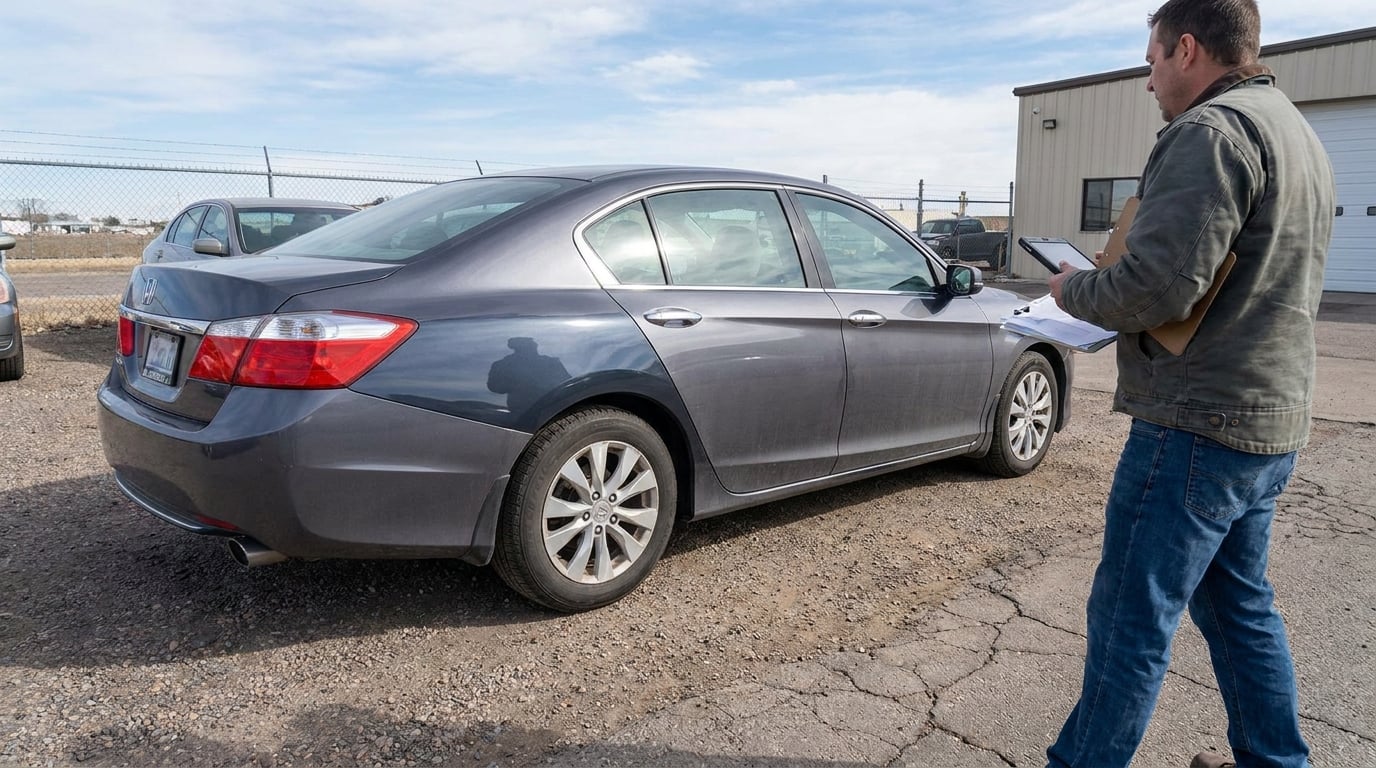
The crash scene holds the strongest evidence you will ever have, and it begins deteriorating almost immediately. Insurance companies determine fault by interviewing involved parties, witnesses, and reviewing accident reports. Without solid scene documentation, you may find it harder to counter the other driver’s version of events.
Here is what you should collect at the scene if your injuries allow:
- Photographs of vehicle damage, road conditions, skid marks, and traffic signals
- Contact information for witnesses
- The other driver’s insurance and license details
- Police report reference number
- Notes about weather, lighting, and time of day
Under the Crime Victims Compensation Act (740 ILCS 45/10.1(d)), an award can be reduced or denied if the injured motorcyclist’s actions contributed to causing the crash. This makes scene evidence vital. Without it, an insurer may attempt to shift blame onto you, potentially diminishing your recovery.
💡 Pro Tip: If you’re too injured to take photos, ask a bystander or passenger to document the scene. Even a few clear images can make a meaningful difference in proving negligence.
Understand How Fault Affects Your Recovery in Illinois
Illinois follows a modified comparative negligence standard under 735 ILCS 5/2-1116, which directly impacts how much compensation you can receive. Under this law, an injured party may recover damages only if they are not more than 50% at fault for the crash. If you are more than 50% responsible, you are barred from recovery entirely. If your fault is 50% or less, your settlement is reduced proportionally by your percentage of fault.
If settlement cannot be reached with the insurance company, courts make the final determination of comparative negligence. The insurer may interview all parties, review the police report, and assess physical evidence to make their initial fault determination. This is why the evidence you gather at the scene and the medical records you secure carry so much weight.
| Factor | How It Affects Your Claim |
|---|---|
| Your fault is 50% or less | You may recover damages, reduced by your fault percentage |
| Your fault is more than 50% | You are barred from recovery |
| No police report filed | Insurer relies more on the other driver’s account |
| Strong scene evidence | Supports your version and helps counter blame-shifting |
| Delayed medical treatment | May weaken the link between the crash and your injuries |
💡 Pro Tip: Even if you feel partly at fault, do not admit liability at the scene or to the insurance company. Fault determinations involve complex legal analysis under Illinois comparative negligence law.
Lost Wages and Future Earnings After a Motorcycle Crash
Injured motorcyclists in Illinois can pursue compensation for both lost wages and future lost earnings. Under the Crime Victims Compensation Act, 740 ILCS 45/2(h)(14), loss of earnings is calculated based on the victim’s average net monthly earnings for the six months before the crash, capped at $2,400 per month. The recovery may be reduced if the motorcyclist fails to pursue available substitute work they were capable of performing.
This means documenting your medical restrictions and employment impact immediately is essential. If your doctor restricts your ability to work, get that in writing. If you attempt to return to lighter duties and cannot, document that as well. These records protect you from arguments that you unreasonably failed to mitigate losses.
Insurance Minimums and What They Mean for Your Claim
Illinois requires all motorists, including motorcyclists, to carry minimum liability insurance of 25/50/20 under 625 ILCS 5/7-203. That breaks down to $25,000 per person and $50,000 per accident for bodily injury, plus $20,000 for property damage. In many serious motorcycle crashes, these minimums may fall short of covering medical bills, lost income, and pain and suffering. Exploring all available sources of recovery is a conversation to have with your motorcycle accident attorney early.
💡 Pro Tip: Keep a daily journal noting pain levels, mobility limitations, and emotional state. This contemporaneous documentation can strengthen pain and suffering claims beyond what medical records alone may show.
Frequently Asked Questions
1. How long do I have to report a motorcycle crash to law enforcement in Illinois?
If the crash involves a criminal act like a hit-and-run, you must notify law enforcement within 72 hours under 740 ILCS 45/6.1(b). The Attorney General may extend this deadline if late notice was reasonable. A driver who leaves the scene must report to police within 30 minutes. Seeking medical care at a facility can also satisfy the notification requirement under 740 ILCS 45/6.1(b-1) and (b-2).
2. Can I still recover damages if I was partially at fault for the crash?
Yes, in many cases you can. Under Illinois’s modified comparative negligence rule (735 ILCS 5/2-1116), you may recover damages as long as your fault is not more than 50%. Your compensation is reduced by your percentage of fault. If you are more than 50% responsible, recovery is barred.
3. What should I do if the other driver fled the scene?
Document everything about the vehicle and contact law enforcement immediately. A hit-and-run is a serious criminal offense in Illinois. Seek medical attention right away, which can fulfill notification requirements under the Crime Victims Compensation Act. For guidance specific to your situation, riders in the Aurora area and beyond can review post motorcycle accident steps in IL for additional insight.
4. Will my compensation be reduced if I did not seek medical care right away?
Delayed treatment can create gaps that insurers may use to argue your injuries were not caused by the crash. While no statute mandates a specific treatment timeline, prompt medical care strengthens the causal link between the accident and your injuries. It also fulfills notification requirements under 740 ILCS 45/6.1(b-1) and (b-2) if the crash involved a criminal act.
5. What is the minimum insurance coverage required for motorcyclists in Illinois?
Illinois mandates minimum liability coverage of 25/50/20 under 625 ILCS 5/7-203. This means $25,000 per person, $50,000 per accident for bodily injury, and $20,000 for property damage. These minimums apply to motorcyclists and car drivers equally. In severe crashes, the at-fault driver’s minimum policy may not fully cover your losses.
Protecting Your Rights Starts With the Right Steps
The actions you take immediately after a motorcycle crash in Illinois lay the groundwork for everything that follows, from medical recovery to your legal claim. Staying at the scene, reporting the crash, gathering evidence, and seeking prompt medical care are legal requirements and strategic building blocks for pursuing full compensation. Every detail you preserve now protects you from blame-shifting and strengthens your position against the at-fault driver and their insurer.
Do not navigate this process alone. Contact 844SeeMike (PI) by calling 312-786-4442 or get in touch online to discuss your motorcycle crash case with a team that understands what injured riders in Illinois are up against.