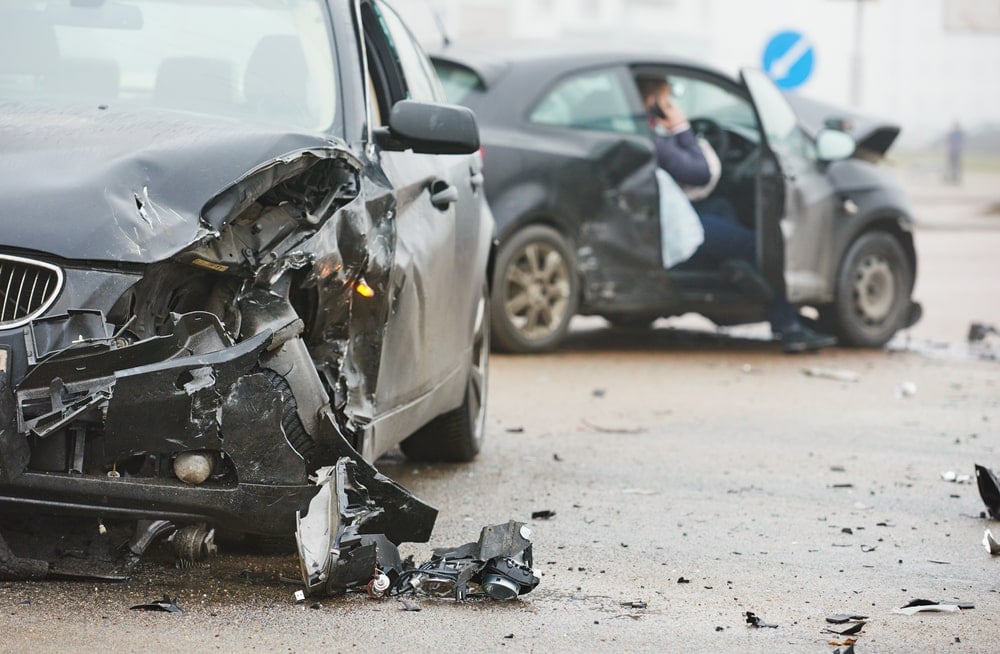
Texting behind the wheel has been illegal in Illinois since January 1, 2010, and holding a phone at all while driving has been illegal statewide since January 1, 2014. The numbers behind those laws explain why: distracted driving is one of the deadliest hazards on the road, and a driver who causes a crash while distracted can be held responsible for every injury and loss that follows.
The Alarming Statistics on Texting and Driving
A widely cited study out of Cohen Children’s Medical Center reported that texting while driving had overtaken drinking and driving as the leading cause of death among American teenagers, putting the annual toll above 3,000 compared with roughly 2,700 in drunk-driving crashes. Other researchers have questioned how those deaths were counted, so treat the comparison as contested rather than settled. What is not in dispute is how common the behavior is: despite some surveys’ claims that texting while driving is becoming less “socially acceptable” among teenagers, over 50% have admitted to doing so regularly, and a Virginia Tech Transportation Institute study of heavy-truck drivers found the crash risk was roughly twenty-three times greater while texting. What’s equally alarming is that 80% of adults have also been guilty (at least once), and the regular fifty-percent rate of texting drivers is the same among adults as teenagers.
There is an oft-quoted “two-second rule” in driving, which allows for a 2-second gap between a driver and the car in front of him/her. The problem, of course, is that the average time it takes to receive or send a text, about 4.6 seconds, is more than twice as long. A car can move the length of a football field in this time; even a split second of distraction can have devastating consequences.
The broader injury toll is just as sobering. There were 421,000 people injured in auto accidents in 2012 due to distracted driving, an increase of 9% from 2011, and the CDC states that 1 in 5 auto accidents where someone is injured are due to distracted driving. In 2010, more than 3,000 people were killed in accidents involving a distracted driver, while an estimated 416,000 people were hurt; 18% of injury-causing traffic accidents were attributed to a distracted driver, which rivals that of drunk driving accidents. Research has found that drivers using a cell phone are four times as likely to be involved in an accident, and that texting while driving can have a similar impact on someone’s driving ability as being intoxicated.
Survey data continues to underscore how common the behavior is. A survey conducted by The Center for Internet and Technology found that 74% of drivers have engaged in a texting-related activity while driving, including reading texts while driving (43%), checking for new messages while driving (35%), and sending texts while driving (27%). The survey also covered reading text messages at a red light (66%), sending texts at a red light (48%), and checking for messages at any stoplight (49%). It’s important to remember that these percentages are of the drivers who participated in the survey rather than all drivers in the United States, though such surveys are usually meant to represent the entire population using a random segment of citizens. A CNN article reported that 70% of surveyed teens admitted to using mobile apps while driving; asked to pick the worst of three driving behaviors, 29% said intoxicated driving, 25% said sending a text message, and only 6% said actively browsing or posting on social media. A separate National Safety Council survey found that 74% of drivers have used Facebook while driving, 37% have used Twitter, 35% have used YouTube, and 33% have used Instagram.
Who Are the Distracted Drivers?
Research has found that more than 50% of all U.S. drivers have reported using a cell phone in the last 30 days, and one in seven admit to texting while driving. Almost half of all 16- to 24-year-olds admit to texting while driving, while 67% of 25- to 34-year-old drivers talk on their phones while driving. The AAA Foundation for Traffic Safety estimates that as many as nine in ten millennials have engaged in some sort of “risky” driving, such as distracted driving, speeding, and running red lights, and the age group of 19-24 is significantly more likely than other groups to send or read a text message while driving.
What Is Distracted Driving?
Distracted driving occurs when the driver is focused on anything other than driving, which increases the risk of error or an accident. The National Highway Traffic Safety Administration treats any activity that takes attention away from driving as distracted driving, and warns that it endangers the driver, the passengers, and everyone else on the road.
Distracted driving is commonly divided into three categories: “visual,” when a driver’s eyes are distracted; “manual,” when a driver’s hands or feet are not properly positioned; and “cognitive,” when the driver is not attentive and focused on the road and operating the vehicle. Studies have shown that texting while driving can combine all three types of distraction, which significantly increases the risk of causing an accident.
While cell phone use is the most cited example, there are many sources of distraction, including:
- Texting, talking, or emailing on a cell phone
- Eating or drinking
- Talking to others in the vehicle
- Adjusting the music, radio, or a GPS device
- An object, person, or event outside of the vehicle, such as an accident scene or an animal
- Lighting, smoking, or dropping a cigarette
- Reaching for an object in the vehicle or adjusting mirrors
- Inattentive thought, fatigue, or a distraction from a medical condition
Anything that forces a driver to take both hands off the wheel or their eyes off the road is considered distracted driving. Knowing the warning signs can help you avoid an accident or decide when to call the authorities. These signs include switching lanes or swerving within a lane, braking suddenly, running red lights or stop signs without stopping, following other cars too closely, and driving too fast or too slow for the speed limit.
Distracted Driving and Motorcyclists
A common cause of accidents involving cars and motorcycles is distracted driving, which includes distractions such as cell phones, food and drinks, the radio, and conversation with passengers. Because motorcyclists are far less protected, a moment of inattention behind the wheel of a car can be catastrophic for a rider. Distracted driving and a lack of caution when sharing the road with motorcyclists is a devastating combination that can cause life-changing injuries to everyone involved.
Distracted Driving and Snapchat’s Speed Filter
Snapchat is a popular smartphone app that lets users send and receive photos and videos which disappear within one to ten seconds of being viewed. It also offers “filters,” including one that posts the user’s speed in miles-per-hour at the time the photo was taken. Some users have fooled around with this filter behind the wheel, resulting in accidents and serious injuries, including a publicized crash outside Atlanta, Georgia.
According to the lawsuit, a teen driver in Georgia was driving over 100 m.p.h. in a 55-m.p.h. zone, as indicated by the photo she took with Snapchat’s speed-reading filter. The resulting accident left the driver she hit with traumatic brain injuries (TBI) and a five-week stay in an intensive care unit. A lawsuit was filed against Snapchat to hold the company and the teen driver accountable. Other crashes have been linked to the same filter, and in 2022 the Georgia Supreme Court allowed the negligent-design claim against Snap to go forward, holding that a manufacturer’s duty to design a reasonably safe product has no blanket exception just because a third party misused it (Maynard v. Snapchat, Inc., 313 Ga. 533). That is Georgia law rather than Illinois law, and in most distracted-driving cases the distracted driver remains the party held at fault. The lesson is plain: when you’re behind the wheel, put down the phone.
Texting, Driving, and the Law in Illinois
Illinois has banned composing, sending, or reading electronic messages behind the wheel since January 1, 2010 (625 ILCS 5/12-610.2, added by P.A. 96-0130), and since January 1, 2014 the same statute has barred holding a phone at all while driving anywhere in the state (P.A. 98-0506). Amendments effective January 1, 2024 extended it to watching or streaming video and joining video conferences. The narrow exceptions include reporting an emergency, communicating with emergency personnel, using the device in voice-operated or hands-free mode, pressing a single button to start or end a call, and using it while parked or stopped in traffic with the transmission in neutral or park. Navigation and GPS systems fall outside the definition of an electronic communication device.
Two rules go further. In a school speed zone, in a construction or maintenance speed zone, and within 500 feet of an emergency scene with lights activated, no driver of any age may use a hand-held wireless phone, though voice-operated use and a single button press to start or end a call are still allowed (625 ILCS 5/12-610.1). And a driver under 19 who holds an instruction permit or a graduated driver’s license may not use a wireless phone at all, hands-free included, except to report an emergency. Several cities, including Chicago, have their own hand-held ordinances on top of the state law.
The fines climb with each violation, starting at $75 for a first offense and reaching $150 for a fourth or later one. The exposure is far more serious when someone gets hurt: a violation that causes great bodily harm, permanent disability, disfigurement, or death is an aggravated offense charged as a Class A misdemeanor or a Class 4 felony, on top of any civil claim the injured person brings.
Chicago’s hands-free ordinance, which prohibits the use of cell phones while driving unless used with a hands-free device, went into effect in 2005. In 2010, nearly 24,000 tickets were issued for violating the ordinance, resulting in nearly $2.2 million in revenue for the city. Surrounding municipalities are anything but uniform: in March 2012, the Chicago Tribune surveyed 270 municipalities and found that less than half have their own ordinance, with most relying on the state law as it stood then, which barred younger drivers from using cell phones at all and required adults to use hands-free devices in school and work zones. The statewide hand-held ban that took effect in 2014 has since made that patchwork largely academic. As of September 10, 2012, there were 627 deaths due to car accidents in the state, though it’s unclear how many were caused by cell phone use.
Young drivers are the most vulnerable demographic. In 2010, young drivers between the ages of 16-20 accounted for less than 7% of licensed drivers in Illinois yet were involved in over 9% of car accidents. It is possible that Chicago’s enforcement has made its streets comparatively safer for young drivers: in 2010, only 14.2% of the accidents in Illinois involving young drivers occurred in Chicago.
Liability for Texting and Driving Accidents
When a driver’s careless, reckless, or otherwise-negligent behavior results in an auto accident, the driver may be held legally liable for all damages and losses, and texting and driving is among the deadliest distracted driving behaviors on our roads today. In a personal injury claim, you and your attorney prove the other driver’s negligence in a multi-step process:
- Duty of care. It must be established that the other driver had a legal duty to drive in a safe and reasonable manner that does not pose unnecessary risks to others.
- Breach. Texting while driving is a breach of this duty because the driver is distracted and posing serious, unnecessary safety risks to everyone on the road as well as pedestrians.
- Causation. Your attorney must establish that the driver is legally at-fault because his or her distraction was the direct cause of the accident and your resulting injuries.
- Damages. Finally, it must be demonstrated that you suffered losses, such as personal injuries, vehicular damage, medical expenses, and time missed from work.
Damages are often divided into “economic” and “non-economic” damages. Economic damages are calculable using dollar amounts, while non-economic damages are more difficult to calculate and typically pertain to pain and suffering, loss of consortium, or lost quality of life.
Preventing Distracted Driving
While there is no legitimate excuse for texting and driving – barring a genuine emergency – drivers offer many reasons for doing it: believing their driving performance is not affected, feeling that another person expects an immediate response, overconfidence in the ability to multitask, fear of missing something important, and force of habit. Awareness matters, and these statistics should be known to help keep phone use while driving to an absolute minimum. Texting while driving, including voice texting, should be discouraged at every available opportunity, and it’s important to talk with your children about the dangers of cell phone use behind the wheel.
Developers have also released a number of apps meant to curb texting while driving, some of which can prohibit it entirely by “locking” the phone’s mechanisms. These and similar apps include:
- Cellcontrol
- Drivemode
- Drive Safe Mode
- GetSafeDrive
- Live2Txt
If a Texting Driver Caused Your Crash
If a driver on their phone hurt you or someone you love, we will look at phone records, the citation and any witness accounts.
No fee unless we win.
This article is general information, not legal advice.