If you were hurt in a retail store because the owner failed to keep it safe, you may be able to recover money for your medical bills, lost wages, and pain and suffering. Most retail store negligence settlements resolve through negotiation with the store’s insurer rather than a trial, and what a case is worth depends on how serious the injury is, how clear the store’s fault is, and how well the losses are documented. Here is how these claims work in Illinois and what to expect from the settlement process.

What Retail Store Negligence Settlements Are Worth
Every case is different, and no attorney can promise a specific amount. Still, looking at broad settlement ranges by injury severity can help set realistic expectations. The figures below are illustrative and drawn from how these cases tend to resolve nationally. They are not a prediction for your case, and past results do not guarantee future outcomes.
Minor injuries: Sprains, bruises, minor cuts, and soft-tissue strains that heal fairly quickly often settle from a few thousand dollars up to roughly $25,000, depending on treatment and time missed from work.
Moderate injuries: Non-surgical fractures, concussions, and torn ligaments commonly fall in the $25,000 to $100,000 range.
Severe injuries: Surgical fractures, spinal injuries, and traumatic brain injuries that require extensive treatment tend to run from $100,000 to $500,000 or more.
Catastrophic injuries: Permanent disability, paralysis, or long-term cognitive impairment can lead to settlements in the high six figures or into the millions, especially where the store’s negligence is clear.
The single biggest driver is the severity and permanence of the injury, but liability evidence matters just as much. A claim backed by security footage, an incident report, and prompt medical records carries far more weight than one built on memory alone.
Understanding Personal Injury in Retail Environments
When you shop at a retail store, the owner owes you reasonable care under the circumstances regarding the condition of the premises (740 ILCS 130/2). If the store falls short of that duty and you are hurt, you may have grounds for a claim. Recognizing the types of injuries that happen and what causes them helps clarify liability and potential compensation.
Types of Injuries in Stores
- Slip and fall accidents, often from wet floors or loose mats
- Trip and fall accidents from cords, clutter, or uneven flooring
- Falling objects from improperly stocked shelves
- Overexertion from lifting heavy items without proper equipment
- Cuts and lacerations from sharp edges or broken merchandise
Common Causes of Store Injuries
Most store injuries are preventable with proper care and maintenance. Understanding the causes helps when it comes time to build a settlement claim. Common causes include:
Slip and fall accidents: Wet floors, spilled liquids, recently mopped or waxed floors without warning signage, or loose mats and rugs.
Tripping hazards: Stock left in aisles, electrical cords, uneven flooring, or poorly maintained carpeting.
Falling merchandise: Overstocked shelves or improperly secured items that fall and strike customers below.
Defective equipment: Broken or malfunctioning shopping carts, escalators, elevators, or automatic doors.
Poor lighting: Inadequate lighting that hides hazards and leads to trips, falls, or collisions.
Overcrowding: During sales or special events, crowding can lead to trampling or being pushed into shelving or displays.
Parking lot incidents: Potholes, cracks, and poor lighting that cause falls or vehicle-related accidents.
Structural hazards: Loose tiles, damaged floorboards, or staircases in disrepair.
Inadequate security: A lack of reasonable security measures that leaves customers exposed to assault or other criminal activity.
Construction zones: Renovation or construction areas that are not properly sectioned off, or debris left in customer pathways.
Snow and ice sit in a category of their own here. Illinois follows what courts call the natural accumulation rule, which means a store generally owes no duty to remove snow or ice that fell and froze on its own, and no duty to warn you about it. These claims usually turn on an unnatural accumulation instead: water draining off a roof or downspout and refreezing across a walkway, a rut or slope that funnels melt into one spot, or a plowing and salting job done so badly it made the surface worse than it started.
Retailers have a legal obligation to provide a safe environment, which includes regular inspections, prompt cleanup of spills, adequate security, proper signage, and keeping all areas free of dangerous conditions. When a store falls short, it can be held liable for the injuries that result. If you were hurt this way, an Illinois slip and fall lawyer can review what the store did or failed to do.
How Store Liability Works
Personal injury law lets someone who is harmed by another party’s negligence seek financial compensation. In a store injury case, that usually means proving the retailer failed to act with reasonable care.
Negligence and Liability
Negligence is the failure to behave with the level of care that a reasonably careful person would use in the same situation. To win a store injury claim, you generally have to establish four things:
Duty of care: The store owed you a duty to keep the premises reasonably safe.
Breach of duty: The store breached that duty by acting carelessly or failing to act.
Causation: That breach directly caused your injury.
Damages: You suffered actual losses, such as medical bills or lost income, as a result.
A key question is whether the store knew, or should have known, about the hazard. If a spill sat in an aisle long enough that routine inspections should have caught it, the store may be liable even if no employee actually saw it. That standard, sometimes called constructive notice, is often where these cases are won or lost.
Illinois also puts a limit on the duty itself. A hazard that is open and obvious to a reasonable person, such as a large marked display sitting in the middle of an aisle, may not create liability at all. The limit has exceptions, and the strongest one in a retail case is distraction, since a store is built to pull a shopper’s attention onto the shelves and away from the floor.
What Affects the Value of a Store Injury Settlement
Beyond the injury itself, several factors push a settlement up or down:
- Total medical costs, including future treatment
- Lost wages and any reduced earning capacity
- The strength of the liability evidence
- The severity and permanence of the injury
- Your own share of fault, if any
That last point matters in Illinois. The state follows a modified comparative negligence rule, so if you are found partly at fault, your compensation is reduced by your percentage of fault, and you are barred from recovering anything if you are found more than 50% at fault (735 ILCS 5/2-1116). Stores and their insurers know this and often argue that a shopper “wasn’t paying attention” to shrink or defeat a claim. Solid evidence, such as camera footage and witness statements, is the best answer to those arguments.
Steps to Take After a Store Injury
What you do in the hours and days after an injury can make or break a claim.
Seek Medical Attention
Your health comes first, and a prompt medical evaluation also creates an official record that ties your injury to the incident. Some conditions, like concussions and internal injuries, are not obvious right away.
Document the Injury
Capture as much detail as possible while it is fresh:
- Take clear photos of the injury, the hazard, and the surrounding area
- Collect names and contact information for any witnesses
- Save all medical records and receipts related to the injury
Report to Management
Reporting the incident creates a formal record with the store:
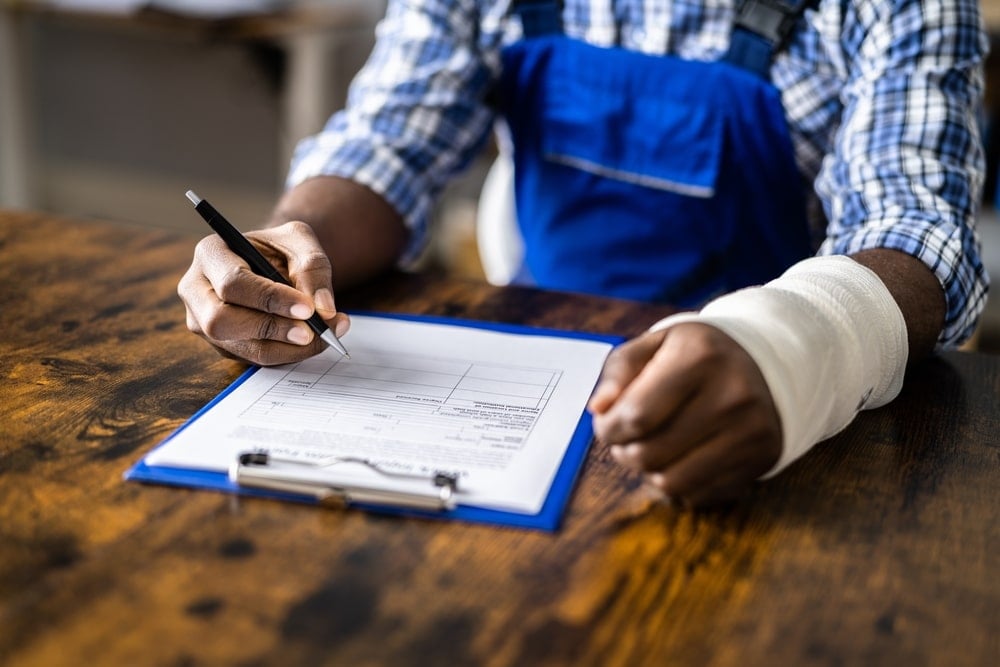
- Request an official accident report form
- Give clear details without admitting fault
- Get a copy of the report for your records
Filing a Personal Injury Claim
Once you are injured in a retail store, you can seek compensation through a personal injury claim. That usually means identifying the negligent party and dealing with insurance companies to reach a settlement.
Determining the Responsible Parties
First you have to establish who is at fault. Often the store itself is responsible because of a breach in its duty of care, whether through poor maintenance, unsafe conditions, or missing signage. Evidence of that negligence has to be gathered and preserved.
The Role of Insurance in Claims
After liability is identified, the injured party generally files a claim with the store’s insurance company, which then assesses the claim and may offer a settlement. Insurers often contest claims when they see any doubt about the store’s liability or the extent of the injuries, which is why documentation is so important.
Most Store Injury Cases Settle
The large majority of personal injury cases never reach a courtroom. Estimates vary, but roughly 95% of civil cases settle at some stage. A settlement is simply an agreement to accept a specified sum in exchange for not pursuing the case further, and it can happen at almost any point, from before a lawsuit is filed to after a verdict while an appeal is on the table.
Federal civil trial data collected by the Bureau of Justice Statistics shows that only a small share of personal injury cases go all the way to trial, and among those that did:
- Plaintiffs succeeded in roughly half of cases that reached a verdict
- Auto accident cases had the highest plaintiff success rate, around 61%
- Medical malpractice plaintiffs prevailed in only about 19% of trials
Settling avoids the cost, delay, and uncertainty of a trial, which is why it is the outcome in the vast majority of store injury claims.
Calculating Compensation
Compensation in a store injury case is generally built from two types of damages.
Economic Damages
Economic damages are the quantifiable financial losses. Lost wages are a key piece, covering income you could not earn from the time of the injury through your expected recovery. For a full picture, consider both:
Current lost income: The immediate wages lost because of the injury.
Future lost earnings: Income lost if a long-term disability limits your ability to work.
Longer-term losses may be projected with tables that account for inflation and expected career progression.
Non-Economic Damages
Non-economic damages cover losses that are not measured directly in dollars, including pain, suffering, and emotional distress. They are harder to quantify because they are subjective, but they are just as real. The more severe the injury and the greater its effect on daily life, the higher these damages tend to be. There is no single formula, though a per diem approach or a multiplier of the economic damages is often used to estimate them.
How Long You Have to File in Illinois
Time limits are strict, and missing one usually ends a claim before it starts. In Illinois you generally have two years from the date of the injury to file a personal injury lawsuit (735 ILCS 5/13-202). A few situations move that date. If the injured shopper was a child, the two years generally do not start running until their 18th birthday (735 ILCS 5/13-211). If the claim is against a local public entity rather than a private retailer, it has to be filed within one year (745 ILCS 10/8-101), which catches people who assumed they had two. A Naperville slip and fall lawyer or another local injury attorney can pin down the exact timeline for your case and make sure evidence is preserved before it disappears.
How 844-SEE-MIKE Can Help
In a store injury case, an attorney handles the parts that trip people up, from proving the store’s breach of duty to standing up to insurance adjusters who are trained to pay as little as possible. Legal help matters most when the injury is serious, treatment is ongoing, or the store denies fault.
When choosing a lawyer, it helps to look at their focus on personal injury work, their standing in the legal community, their history with cases like yours, and their fee structure. 844-SEE-MIKE works on a contingency fee basis, which means you pay nothing unless we recover money for you. Whether you were hurt at a store in the city or the suburbs, a Chicago slip and fall attorney or an Aurora slip and fall lawyer from our team can review your case and explain your options. You can also learn more about our broader Illinois personal injury practice.
Frequently Asked Questions
How much money can you get for falling in a store?
It depends on how serious the injury is and how clear the store’s fault is. Minor injuries often settle for a few thousand dollars up to around $25,000, while severe or permanent injuries can reach the high six figures or more. These are illustrative ranges, not a promise, and every case is valued on its own facts.
What are the four proofs of negligence?
To hold a store liable, you generally have to show duty of care, a breach of that duty, causation, and damages. In plain terms, the store owed you a safe environment, failed to provide it, that failure caused your injury, and you suffered real losses as a result.
Is a store liable for a customer injury?
A store can be liable when it knew, or reasonably should have known, about a dangerous condition and failed to fix it or warn customers. If a hazard existed long enough that routine inspections should have caught it, the store may be responsible even if no employee saw it happen. Snow and ice are the exception: Illinois generally does not hold a property owner liable for a natural accumulation, so those claims usually depend on showing an unnatural one.
What is a reasonable settlement offer?
A reasonable offer fully accounts for your medical bills, lost wages, future treatment, and pain and suffering. Initial offers from insurers are often lower than a claim is truly worth, so it is wise to have an attorney evaluate any offer before you accept it and sign a release.
How long do I have to sue a store in Illinois?
Illinois generally gives you two years from the date of the injury to file a personal injury lawsuit (735 ILCS 5/13-202). A child’s two years usually do not start until they turn 18 (735 ILCS 5/13-211), and a claim against a local public entity is cut to one year (745 ILCS 10/8-101). Confirm your deadline with an attorney as soon as possible.
Before the Store's Insurer Values Your Claim
If you were hurt in a store, we will check what the store knew and what your future treatment and lost wages add up to.
No fee unless we win.
This article is general information about Illinois law and is not legal advice for your specific situation.