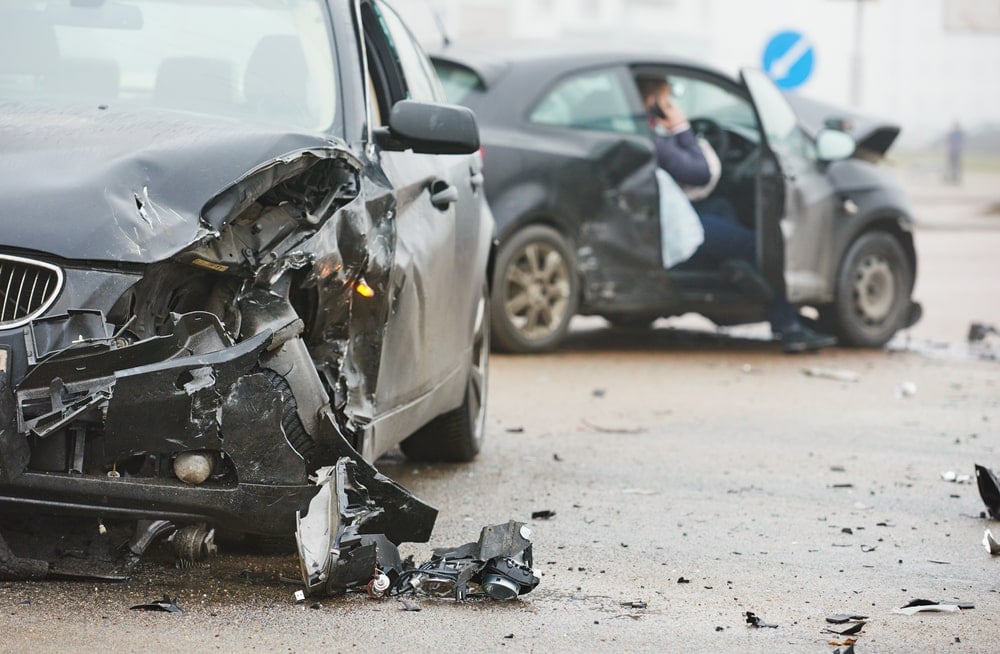
A man drove through a railroad crossing gate and was struck by a Metra train in Round Lake Park on Wednesday. The accident left the man and his seven-year-old daughter dead. The gate had been repaired hours earlier, and there is no indication it was malfunctioning at the time of the accident, according to police.
7-year-old Alyssa Carranza died from a broken neck as she was thrown from the vehicle and struck a post, according to the Lake County coroner’s office. Her body was not found immediately, but was discovered within the hour by investigators in the snow in a ditch nearby.
The driver, Francisco Carranza, 36, died of head trauma sustained in the accident. Carranza was driving a Range Rover on Illinois Highway 134 when the vehicle drove in front of an oncoming train just before 6 pm. The train was traveling at nearly 60 mph and the engineer could not stop in time, according to a Metra spokeswoman.
The Range Rover was pushed into another SUV carrying a mother and children, including an infant, but no other injuries were reported. According to officials, the train sustained $200,000 in damage and was stuck on the tracks for almost 3 hours while police investigated. Passengers were transferred to a bus. On Thursday, officials reported that Carranza had alcohol in his system.
Railroad-Crossing Accident Claims in Illinois
Losing a family member at a railroad crossing is devastating, and in the aftermath many families are left with questions about what happened and what they can do. While every crossing collision is different, Illinois law gives grieving families a path to answers and, where someone else is at fault, to accountability.
When a person dies because of another party’s negligence, Illinois handles the claim through the deceased person’s estate. The wrongful death action is brought by the personal representative of the estate, and any recovery is for the exclusive benefit of the surviving spouse and next of kin (740 ILCS 180/2). Families are often surprised that an estate has to be opened and a representative appointed before the case can be filed, which takes time. Recovery can include grief, sorrow, and mental suffering alongside financial losses.
These claims generally must be filed within two years of the date of death (740 ILCS 180/2). Two situations change that. Where the death resulted from violent intentional conduct, the window can extend to five years, or to one year after the criminal case concludes. In the other direction, a claim against a public transit agency, a municipality, or another local government body generally must be filed within one year, not two (745 ILCS 10/8-101). That shorter deadline matters at a railroad crossing, because responsibility for the gates, signals, and the roadway approach often rests with a public entity. It is worth having the applicable deadline identified early rather than assumed. Survivors who were injured in the same crash generally have two years from the date of injury to bring a personal injury claim (735 ILCS 5/13-202), subject to the same one-year rule where a public entity is involved.
Responsibility for a crossing collision is not always obvious. Depending on the facts, it can involve more than one party, such as a driver, the railroad, or whoever was responsible for maintaining the crossing gates, lights, and signals. Illinois also applies a modified comparative fault rule, so an injured or deceased person’s own share of responsibility reduces the recovery proportionally, and bars it entirely if that share is more than 50% (735 ILCS 5/2-1116). Sorting all of this out usually takes a careful review of the police report, the coroner’s findings, signal-maintenance records, and any available train data. An experienced attorney can gather and preserve that evidence before it is lost.
This article is general information about Illinois law, not legal advice about any specific case.
Frequently Asked Questions
How long do Illinois families have to file a wrongful death claim after a fatal train accident?
In most cases, two years from the date of death (740 ILCS 180/2). If the claim runs against a public transit agency, a municipality, or another local government body, the deadline is generally one year instead (745 ILCS 10/8-101), so it is worth confirming the timeline early rather than waiting.
Who can be held responsible for a railroad-crossing accident in Illinois?
It depends on what an investigation shows. Responsibility can fall on one party or several, including a driver, the railroad, or the entity responsible for maintaining the crossing’s gates and warning devices. Illinois reduces a recovery by the injured or deceased person’s own share of fault, and bars it above 50% (735 ILCS 5/2-1116).
What should I do if a loved one was hurt or killed at a railroad crossing?
Consider speaking with an attorney who can review the police and coroner reports, preserve evidence such as signal records and train data, and explain your family’s options. A consultation with 844-SEE-MIKE is free and comes with no obligation.
If your family is grieving a loss like this, you do not have to sort through it alone. You can learn more about Illinois wrongful death claims and Illinois car accident cases.
Losing Someone at a Railroad Crossing
If someone you love was killed at a railroad crossing, we will review the police and coroner reports and check which deadline applies.