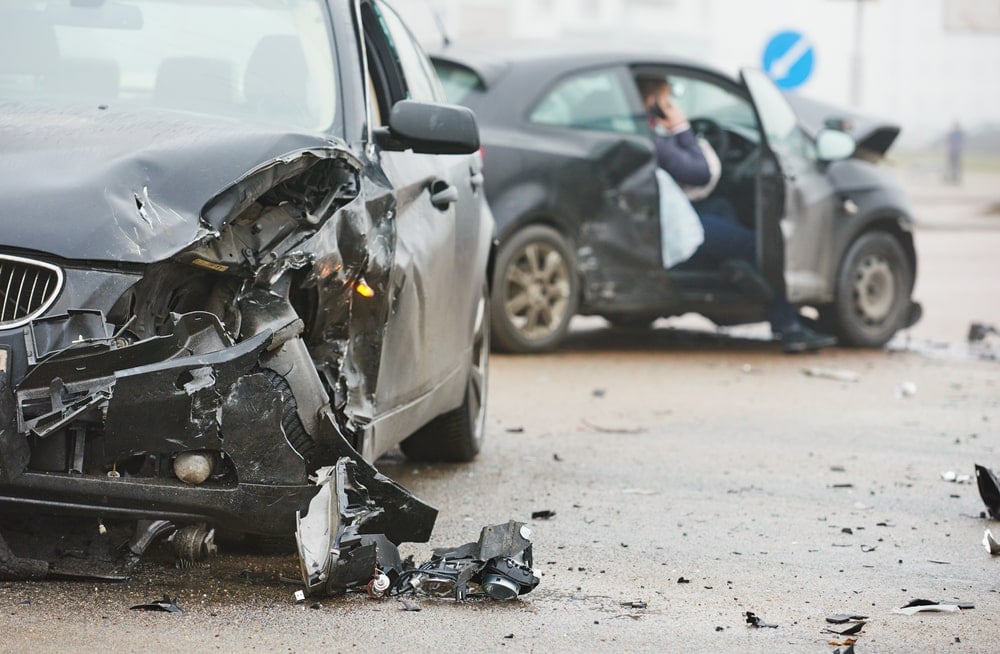
There is no set amount an injured passenger collects after a crash in Illinois. What you recover depends on how badly you were hurt, how much insurance is actually available to pay, and how clearly the blame falls on one or both drivers. Passengers do start with a real advantage: you are almost never at fault for the collision, so the fight is usually about what your injuries are worth rather than whether anyone owes you anything.
What Passenger Claims Tend to Be Worth
Every claim is valued on its own facts, and no lawyer can promise a number before reviewing your medical records. The ranges below are illustrative only. They reflect how injury claims are commonly valued nationally, not results from any particular case, and past results never guarantee a future outcome.
| Injury Level | Typical Examples | Illustrative Range |
|---|---|---|
| Minor | Sprains, bruising, soreness that clears up in a few weeks | $5,000 to $20,000 |
| Moderate | Whiplash, a simple fracture, several months of physical therapy | $20,000 to $75,000 |
| Serious | Surgery, hardware, lasting physical restrictions, time out of work | $75,000 to $250,000 |
| Catastrophic | Brain injury, spinal cord damage, amputation, permanent disability | $250,000 and up, often capped by available coverage |
That last note matters more than the numbers. A claim can be worth far more than anyone will ever pay on it, because recovery is limited by the insurance policies you can reach. Finding every one of them is usually where the real money is.
Which Policies Actually Pay an Injured Passenger
Illinois is an at-fault state, not a no-fault state, and there is no mandatory personal injury protection here. Your medical bills are not automatically covered by your own policy the way they would be in Michigan or Florida, which surprises a lot of people who read national advice about how car insurance works after a crash. Somebody has to be shown at fault before an insurer pays.
Every Illinois driver must carry at least $25,000 per person and $50,000 per crash in bodily injury liability coverage, plus $20,000 for property damage (625 ILCS 5/7-203). As a passenger, you may be able to reach several policies at once:
- The at-fault driver’s liability coverage, whichever vehicle that driver was in
- The liability coverage of the driver you were riding with, if that driver shares blame
- Uninsured motorist coverage, which every Illinois auto policy has to include (215 ILCS 5/143a)
- Underinsured motorist coverage, required once uninsured limits exceed the state minimum (215 ILCS 5/143a-2)
- Medical payments coverage, an optional add-on that pays bills without regard to fault
- A rideshare company’s commercial policy if you were riding in an Uber or Lyft
When two drivers share the blame, both liability policies are typically in play, and so is any underinsured motorist coverage on a household policy once the at-fault limits run out. Rideshare cases follow different rules again, since coverage depends on what the app was doing at the moment of impact. A Chicago rideshare accident lawyer can sort out which layer applies.
How Fault Changes the Number
Illinois follows modified comparative fault. You are barred from recovering only if you are found more than 50% responsible, and any award is reduced in proportion to your own share of the blame (735 ILCS 5/2-1116). Passengers rarely carry meaningful fault, which is why passenger claims often settle faster than driver claims.
Insurers still try. One argument they raise and lose is the seat belt. Illinois requires drivers and passengers to buckle up, but the same statute says failure to wear a seat belt “shall not be considered evidence of negligence, shall not limit the liability of an insurer, and shall not diminish any recovery for damages” (625 ILCS 5/12-603.1). An adjuster who tries to shave your claim because you were unbelted is arguing against the statute.
The harder problem is personal. If you were riding with a relative you live with, many auto policies contain a household exclusion that can block a claim between family members under the same roof. That does not necessarily end your case, but it changes which policy you pursue, and it is worth raising with a lawyer early rather than after you have given a recorded statement.
What Your Losses Actually Include
A passenger claim is built from documented economic losses plus the human cost of the injury. Economic damages usually cover:
- Ambulance, emergency room, imaging, and hospital charges
- Surgery, follow-up care, medication, and durable medical equipment
- Physical therapy and anticipated future treatment
- Wages lost during recovery, including used sick and vacation time
- Reduced earning capacity if you cannot go back to the same work
Non-economic damages cover pain, disfigurement, loss of a normal life, and the anxiety many passengers carry into the next car ride. These are harder to price and are where an experienced Illinois car accident lawyer earns the difference, because the supporting proof comes from treatment records, work history, and testimony rather than a bill.
Deadlines That Can End a Passenger Claim
Most Illinois injury lawsuits have to be filed within two years of the crash (735 ILCS 5/13-202). Two shorter deadlines catch passengers in particular. If you were hurt on a CTA bus or train, the action must be commenced within one year (70 ILCS 3605/41). If a city, county, township, park district, or other local public entity is involved, whether that is a Pace bus or a municipal vehicle that ran the light, the deadline is also one year (745 ILCS 10/8-101). Missing either one usually ends the claim no matter how strong the injuries are.
Insurance deadlines run shorter still. Most policies require prompt notice of the crash, and the sooner a passenger injury lawyer in Chicago can lock down the police report, the vehicle data, and any nearby camera footage, the less room an insurer has to rewrite what happened.
What Passengers Can Do to Protect the Claim’s Value
Most of the damage to a passenger claim happens in the first few weeks, before anyone talks to a lawyer. The insurer for the driver who hurt you has an adjuster assigned within days, and that adjuster’s job is to keep the number small. A few habits make that harder:
- Get evaluated even if you feel functional, since a gap between the crash and the first medical visit is the argument insurers reach for most often
- Keep going to the appointments you are given, because missed visits get read as recovery
- Photograph the vehicles, the scene, and any visible injuries while they still look the way they did
- Write down the names of anyone else in either car and any witness who stopped
- Decline to give a recorded statement to the other driver’s insurer until you have talked to a lawyer
- Save the mileage, the co-pays, the equipment receipts, and the days you missed at work
Keep in mind that the driver you were riding with may be one of the parties responsible, which means their insurer is not on your side either, however friendly the first phone call sounds.
Frequently Asked Questions
Can I get money if I was a passenger in a car accident?
In most cases, yes. Passengers are rarely blamed for a crash, so you are generally able to file against whichever driver was negligent, and sometimes against more than one. You still have to prove the negligence and document your injuries, but liability is usually the easier half of a passenger claim.
Who do I file against if I was a passenger in Illinois?
You file against whoever caused the crash. That may be the driver of the car you were in, the driver of another vehicle, or both. If fault is shared, claims can be made against each driver’s insurer, and your award is not reduced unless you were personally at fault for something.
What happens if the at-fault driver does not have enough insurance?
Illinois minimums are low enough that serious injuries routinely exhaust them. When that happens, underinsured motorist coverage on your own policy, or on the policy of a relative you live with, may cover the gap. Those claims have their own notice requirements, so they are worth identifying early.
Can I file a claim if my friend or a family member was driving?
You can. The claim is made against their insurance policy, not against them personally, and their insurer handles the defense and any payment. The exception to watch for is the household exclusion in many policies, which can limit claims between relatives who live at the same address.
How long does a passenger injury claim take to settle?
Straightforward claims with clear fault and completed treatment often resolve in six to twelve months. Cases involving disputed liability, several insurers, or injuries still being treated take longer, because settling before you know the full medical picture usually means settling for less.
What Your Passenger Claim Is Actually Worth
If you were hurt riding in someone else’s car, we will identify every policy that can pay and check for a household exclusion.
No fee unless we win.
If you were hurt riding in someone else’s car, you do not have to work out which policy owes you what on your own. Contact 844-SEE-MIKE for a free, no-pressure review of your options. You pay nothing unless we recover money for you. This article is general information about Illinois law, not legal advice about your particular case.