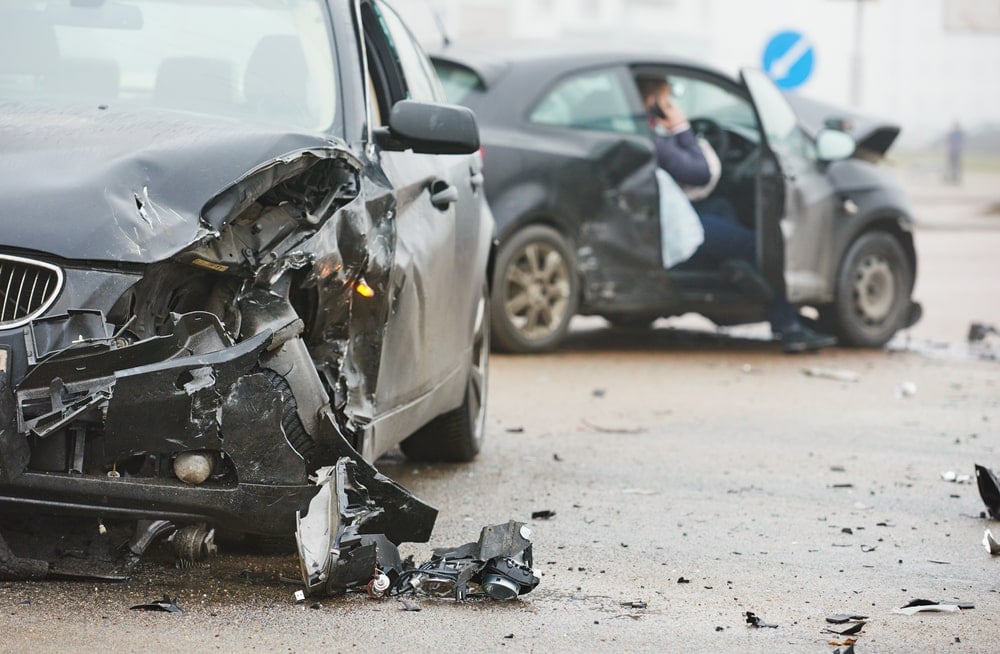
If a truck driver hit you because they were not watching the road, that is a failure to maintain a proper lookout, and it is one of the most common forms of negligence behind serious truck crashes. Improper lookout means the driver did not keep the kind of watch a careful person would have kept, so they missed a hazard they should have seen and could have avoided. When the vehicle involved weighs up to 80,000 pounds, that lapse often leaves the people in the smaller car with life-changing injuries.
If you or someone you love was hurt by a negligent truck driver in Illinois, 844-SEE-MIKE can review what happened and explain your options at no cost. You pay nothing unless we recover money for you.
What Improper Lookout Means
Every driver has a duty to keep a proper lookout, which means staying aware of other vehicles, road conditions, traffic signals, and pedestrians so they can react in time to avoid a collision. Failing to maintain a proper lookout is a form of negligent driving where the driver simply does not see what a reasonably careful driver would have seen.
For a commercial truck driver, that duty covers more ground. It includes checking mirrors and blind spots, watching far enough ahead to anticipate stops, and staying alert to how the truck’s height, width, and cargo affect what the driver can safely do. A lapse in any of these is enough to put everyone nearby at risk.
Why Truck Drivers Have a Higher Duty
Truck drivers carry a greater duty than drivers of passenger vehicles to keep their eyes on the road at all times. Because of their larger blind spots, greater size, and heavier weight, commercial vehicles are harder to slow, stop, and maneuver around hazards.
Maintaining a proper lookout is closely tied to a truck driver’s reaction time. When attention wanders, the driver cannot quickly and safely respond to other drivers, pedestrians, or changing road conditions, and cannot anticipate problems before they happen. A fully loaded semi needs far more distance to stop than a car, so a few seconds of inattention can be the difference between a near miss and a catastrophic wreck.
How a Failure to Keep a Proper Lookout Causes Truck Accidents
The Federal Motor Carrier Safety Administration (FMCSA) has studied why large trucks crash, and driver inattention shows up again and again as a leading factor. Two patterns are especially common in improper-lookout cases:
- Inadequate surveillance, where the driver does not adequately scan their surroundings, which often happens at intersections and during lane changes. Truckers are trained to check mirrors frequently, watch roughly 15 seconds ahead, look left-right-left at intersections, and monitor the brake lights of vehicles in front
- Inadequate evasive action, where the driver does not anticipate a road hazard and fails to brake or steer in time to prevent an avoidable crash
Several unsafe habits push a driver into these patterns:
- Distracted driving from texting, phone calls, eating, or in-cab technology
- Fatigue that slows reaction time and dulls awareness after long hours behind the wheel
- Failing to check blind spots before changing lanes or turning
- General inattention or drifting focus away from the road
Distraction is dangerous for any driver and far more dangerous behind the wheel of an 80,000-pound truck. For more on how careless hiring and supervision contribute to these crashes, see our overview of negligent hiring in truck accident cases.
Common Truck Accident Injuries
When a truck driver fails to maintain a proper lookout, the results are often tragic. Truck crashes tend to cause more serious injuries and are more likely to be fatal than typical car accidents. The injuries we see most often include:
- Broken bones
- Severe lacerations
- Traumatic brain injuries
- Spinal cord injuries
- Paralysis
- Burns
- Psychological trauma
Proving a Truck Driver Failed to Keep a Proper Lookout
You rarely prove improper lookout with the driver’s word alone. It takes evidence, and much of that evidence sits with the trucking company and disappears quickly if no one preserves it. A thorough investigation usually pulls together:
- Cell phone records that show whether the driver was talking, texting, or using an app at the moment of the crash
- Dash-cam and traffic-camera footage showing where the driver was looking
- The truck’s electronic control module, or “black box,” which can record speed, braking, and steering inputs before impact
- Police reports and eyewitness statements describing how the crash unfolded
- Hours-of-service and inspection logs that point to fatigue or missed maintenance
Because carriers and their insurers move fast to protect themselves, getting a lawyer involved early helps preserve this proof before it is lost. Our guide to proving fault in truck accidents walks through the process in more detail, and an experienced Illinois truck accident lawyer can send preservation notices right away.
Illinois Law: Deadlines and Fault
Illinois does not have a single statute labeled “proper lookout.” The duty comes from the common-law obligation every driver has to use reasonable care, and a driver who breaks that duty can be held liable for the harm they cause. Two rules shape almost every Illinois truck-accident claim.
First, timing. In most Illinois personal-injury cases you have two years from the date of the injury to file a lawsuit (735 ILCS 5/13-202). Miss that window and the court can throw the case out no matter how strong it is.
Second, shared fault. Illinois follows modified comparative negligence, so your compensation is reduced by your share of the blame, and you are barred from recovering anything if you are found more than 50% at fault (735 ILCS 5/2-1116). Trucking insurers know this rule and often try to shift blame onto the injured driver to cut what they pay. Building a clear record of the trucker’s improper lookout is how you protect your recovery.
Frequently Asked Questions
What is failure to maintain a proper lookout?
It is a form of negligent driving where a driver does not stay aware of their surroundings, such as failing to check blind spots, not using mirrors, or missing traffic signals and hazards. For truck drivers it can also include not accounting for the truck’s size, cargo, and height and width limits.
Is improper lookout the same as distracted driving?
They overlap but are not identical. Distracted driving, like texting or eating, is one common cause of an improper lookout. A driver can also fail to keep a proper lookout through fatigue, inexperience, or simple inattention, even without an obvious distraction.
How do you prove a truck driver was not paying attention?
Evidence such as cell phone records, dash-cam and traffic-camera footage, the truck’s black box data, police reports, and eyewitness accounts can show the driver failed to watch the road. Much of this evidence is controlled by the trucking company, so it is important to act quickly to preserve it.
How long do I have to file a truck accident claim in Illinois?
Most Illinois personal-injury claims must be filed within two years of the injury (735 ILCS 5/13-202). Some situations can shorten or change that deadline, so it is best to speak with a lawyer soon after the crash.
What if I was partly at fault for the crash?
You can still recover in Illinois as long as you were not more than 50% at fault, though your award is reduced by your percentage of fault (735 ILCS 5/2-1116). If you are found more than half at fault, you cannot recover.
If an Inattentive Truck Driver Hurt You
If an inattentive truck driver hurt you or someone you love, we will look at what phone records, dash-cam footage and black-box data show.
No fee unless we win.
This article is general information about Illinois law and not legal advice for your specific situation.