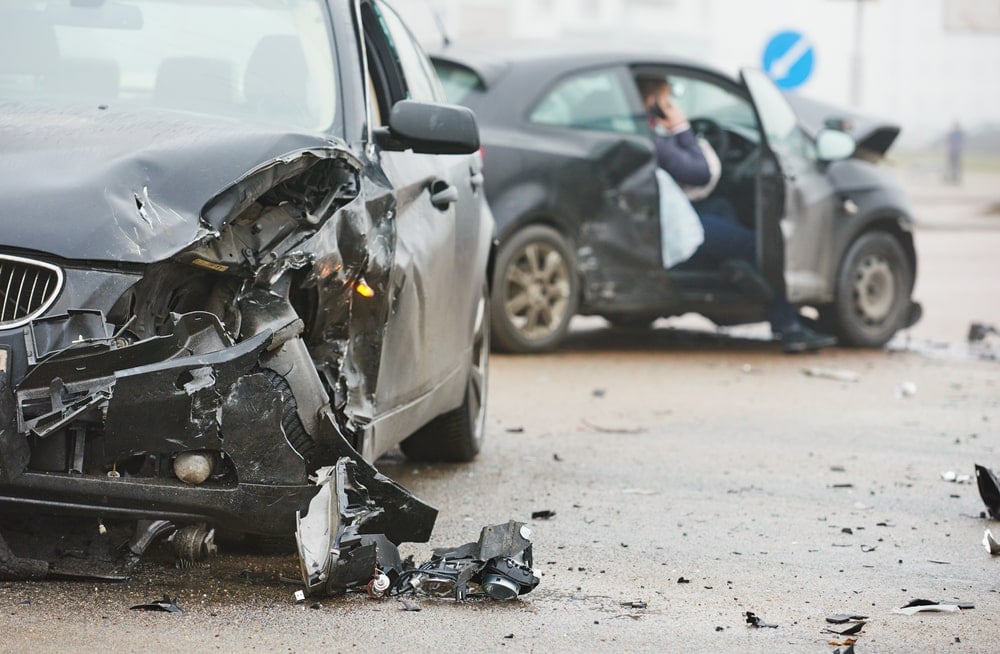
Motorcycle crashes are far less numerous than car crashes, but they are far more likely to cause serious injuries and fatalities. Understanding why these crashes happen, who is most at risk, and how riders can protect themselves is essential to staying safe on the road.
Why Motorcycle Accidents Are So Deadly
Motorcycle accidents are often deadlier than car accidents simply because of the rider’s vulnerability, with less protection and fewer safety features than a car provides. The National Highway Traffic Safety Administration (NHTSA) has found that motorcyclist fatalities occurred 26 times more frequently than passenger car occupant fatalities per vehicle mile traveled. Measured a different way, although motorcycles made up only 3% of all registered vehicles in the United States in 2013, the fatality rate per registered vehicle for motorcyclists that year was 6 times the rate for passenger car occupants.
Common Causes of Motorcycle Accidents
Many car and motorcycle accidents share similar causes: intoxicated driving, road rage, road and construction hazards, speeding, and more. But a car attempting to make a left-hand turn is one of a motorcyclist’s biggest threats, producing about 42% of all accidents involving both types of vehicles. Impact often occurs when the left-turning car strikes a motorcyclist who is passing the car or going through the intersection.
In such an accident, the driver of the car is usually deemed at fault unless the motorcyclist was speeding, in a wrong lane, or driving recklessly. Illinois uses a modified comparative fault rule: if the rider is found partly responsible, their damages are reduced by their share of the fault, but if the rider is found more than 50% at fault, they recover nothing at all (735 ILCS 5/2-1116). That 50% line is why insurers work so hard to shift blame onto the rider.
A few more facts: about 56% of deaths in motorcycle accidents result from head-on collisions with other vehicles, and 25% result from collisions with fixed objects, in which motorcyclists are likely to be thrown from their bikes and experience road rash at high speeds. Of all accidents involving a single motorcycle, about 50% result from alcohol use and/or speeding. Overall, the NHTSA estimates that three of every four motorcycle accidents involve at least one other vehicle. Knowing and understanding the causes of these accidents is essential to preventing them. Here are a few of the most common:
- Aggressive driving. Aggressive driving, as defined by the NHTSA, generally consists of traffic violations that endanger the lives and property of others, along with the road rage that may accompany such acts. If you encounter a driver with road rage, it is best to avoid them to ensure everyone’s safety.
- Texting and driving. This issue is becoming more serious despite efforts to combat it. A widely cited Virginia Tech Transportation Institute study of heavy-truck drivers found that texting raised the risk of a crash or near-crash by 23 times, and no driver is immune to the same loss of attention. Put your phone away while driving and only refer to it in an absolute emergency.
- Sudden stops. Rear-end collisions between two cars are usually not too devastating, but when a motorcycle rear-ends a car, the results can be deadly. Motorcyclists should always maintain a safe distance from the car ahead, and drivers should stay aware of their surroundings and where motorcyclists may be.
- Single-bike accidents. Though newer and younger riders are prone to single-bike accidents, risks are present for drivers of all experience levels; common risks include harsh weather, slippery or gravel-filled roads, and bald or improperly inflated tires. Riders should be aware of these factors and plan for them, especially when difficult road or weather conditions are expected.
Motorcycle Fatality Statistics
According to 2015 motorcycle statistics from the NHTSA:
- Motorcycles made up only 3% of registered vehicles in the U.S., but motorcyclists made up 14% of all traffic fatalities
- About 27% of motorcyclists who lost their lives in traffic accidents did not have the proper licensing at the time of the accident
- About one-third of all fatalities among motorcyclists in 2014 involved speeding
- Fatalities among motorcyclists are more likely to occur on weekends than weekdays
And according to the Centers for Disease Control and Prevention (CDC), the average age of motorcycle fatality victims is on the rise: in 1990, only one in four victims was 40 years or older, but by 2010, over 50% of victims were 40 or older. The CDC also reports that states with universal helmet laws see lower motorcyclist fatality rates than states without them.
Drunk Riding Fatalities in Illinois
Motorcycle fatalities have been increasing in Illinois. Data from the Illinois Department of Transportation shows that more motorcyclists are riding drunk and fatally crashing in the late afternoon and evening hours. Between 6 and 9 p.m., 24% of motorcycle fatalities involve a drunk rider, compared to 11% with cars. In response, Illinois State Police and motorcycle safety advocates launched a campaign reminding bikers of the dangers of mixing alcohol with motorcycle riding, called “Ride sober or get pulled over.” As one local safety and education officer for ABATE (A Brotherhood Aimed Towards Education) put it, if motorists see a motorcycle coming up to an intersection and think they have enough time to turn, they should wait the extra 3 to 5 seconds, because that could be the difference between causing an accident and simply arriving a little late.
Age, Experience, and Injury Severity
Age plays a significant role in how motorcyclists fare in a crash. In terms of fatalities, the 40-and-older age group made up 46% of motorcyclists killed in 2004, compared to 55% of motorcyclists killed in 2013. Bikers age 50 and older now make up a quarter of all U.S. bikers, and their numbers have more than doubled since 1990. Earlier studies showed that injuries among riders age 65 or older increased 87% between 2001 and 2007, while fatalities increased by 145%.
A study from Brown University, published in the journal Injury Prevention in early 2013, examined 1.5 million motorcycle accidents between 2001 and 2007 and found that older bikers are much more likely to end up hospitalized with serious injuries than younger riders. Bikers over 60 are 2 1/2 times more likely than riders in their twenties and thirties to be seriously hurt in an accident, and middle-aged riders were still 66% more likely to sustain serious injury than younger bikers. The study found older riders had a 35% hospitalization rate, middle-aged riders 25%, and young riders 15%.
Middle-aged and older adults suffer more internal organ injuries than younger riders, particularly brain injuries, while younger bikers sustain more non-serious injuries like contusions, abrasions, strains, and sprains. Across all age groups, bone fractures are the most common injury; older and middle-aged adults suffer more upper-trunk fractures, while young bikers are more likely to break their arms. The study’s authors attributed the greater severity among older adults to physiological changes that occur as the body ages, including decreased bone strength, reduced chest-wall elasticity, delayed reaction time, altered balance, and worsening vision. They suggested two ways of reducing injuries among older riders: protective chest gear and training tailored to aging riders.
The Importance of Motorcycle Training
Just as with a car, there is a learning curve for riding a motorcycle, one that is arguably more difficult and time-consuming. If an accident is imminent, a motorcyclist must react quickly to avoid injury, and that depends as much on formal training as on quick reflexes. The famous “Hurt Report,” first published in 1981 and authorized by the NHTSA, remains the most in-depth study of its kind. Based on more than 1,000 motorcycle accidents, 3,600 police reports, and 2,600 interviews with motorcyclists over a two-year period, it found:
- About 50% of the motorcyclists who suffered an accident had less than five months of riding experience at the time; even those with prior experience on other motorbikes, such as off-road bikes, averaged fewer accidents than those without.
- 92% of the motorcyclists in accidents were self-taught and had no formal training.
- In about 66% of single-vehicle accidents involving motorcyclists, the cause was identified as “operator error.”
- A correlation was found between how motorcyclists reacted to hazardous circumstances and whether an accident was avoided or damage minimized; awareness of correct braking procedures was a particularly important factor.
Formal training is strongly recommended for new motorcyclists, along with “refresher” training for those returning to riding after a hiatus. The Motorcycle Safety Foundation (MSF) offers programs in over 2,000 locations nationwide covering the basics of safe riding, braking procedures, and accident-prevention techniques. With 9 of every 10 injured motorcyclists having forgone this training, the incentive could not be stronger to make sure you know what to do if a dangerous situation arises.
Group Riding Tips
Some motorcyclists enjoy riding in groups, especially on highways and open roads. It is not as easy as it looks, however, particularly for beginners: specific formations, group divisions, and rules help ensure everyone rides safely and minimizes the risk of accidents. Here are some important tips for group motorcycle riding:
- Maintain a safe, comfortable speed. Groups tend to move at the speed of their slower riders to avoid losing them; if you must catch up, do not go beyond your own driving capacity.
- Stay in consistent positions. Caution and discipline keep the formation intact so everyone has sufficient space and no other drivers are impeded. Abruptly changing position may surprise fellow drivers and increase the risk of an accident.
- Follow the leader. Groups typically designate at least one rider as the leader to answer questions about the ride. Leaders often hold briefing sessions beforehand to clarify routes and speeds and to accommodate less experienced riders.
- Stay alert and attentive. Riding a motorcycle requires more direct attention than driving a car, and even more so in a group. Each rider must stay focused to maintain the formation.
- Look out for the rider behind you. Each member takes responsibility for the rider behind them, which improves emergency assistance, especially in large groups that are often divided into smaller ones.
- Decide on formations, speeds, and lanes ahead of time. Formations range from lines and trails to “staggers,” and factors like weather and traffic conditions may affect the choice. Once decided, stick to them unless directed otherwise. Experienced riders may use signal systems to communicate changes.
Safety Tips for Every Rider
No matter your experience level, a few habits go a long way toward keeping you safe:
- Always maintain adequate stopping distance between you and the vehicle ahead, and watch for anything that could create a sudden need to stop
- Wear eye protection, which Illinois does require. Every operator and passenger on a motorcycle, motor driven cycle, or moped must be protected by glasses, goggles, or a transparent shield, and contact lenses do not count (625 ILCS 5/11-1404). A windshield extending above the operator’s eyes satisfies the rule
- Wear a helmet. Illinois law does not require one, but we highly recommend wearing a helmet whether you are the operator or a passenger, to protect against serious head injuries and even death. The NHTSA reported that helmets saved 1,630 motorcyclists’ lives in 2013 and that 715 more could have been saved if all riders had worn helmets
- Be especially cautious when riding at night and in poor weather, and make yourself as visible as possible by wearing bright or reflective clothing and always using your lights and turn signals
- Consider free and low-cost safety classes. Around Illinois, riders can find beginner, intermediate, and experienced-rider courses, including free classes through the Northern Illinois University Motorcycle Safety Project
If a Careless Driver Caused Your Crash
If a driver turning left, texting or stopping short hurt you or a loved one, we will look at the police report and witnesses.
The information here is general and not legal advice.