
Understanding Vehicle Value Loss After an Aurora Crash
Key Takeaways: A diminished value claim seeks compensation for the drop in a vehicle’s market value after a crash, even after repairs. In Illinois, these claims are recognized in third-party property-damage settings, while first-party recovery depends on policy language. Illinois case law treats negotiations with the at-fault driver’s insurer as arm’s length, meaning that insurer need not disclose diminished value rights to third-party claimants. Illinois applies a five-year limitations period to property damage actions. After an Aurora collision, documenting repair quality, pre-loss condition, and post-repair resale impact matters when pursuing full property damage compensation.
A diminished value claim is a claim for the loss in your car’s market value after a collision. Even when repaired, buyers and dealers pay less because the car carries an accident history. This issue arises after Aurora auto accidents, especially with newer vehicles, low mileage, or strong pre-crash resale value.
A repaired car may still be worth less than before the wreck. Accident history can substantially reduce value, illustrating why Illinois car accident property damage extends beyond the body shop invoice.
If you were hurt in a crash and your vehicle lost value, 844SeeMike (PI) may help you evaluate property damage along with your injury claim. Call 312-786-4442 or contact the firm to discuss documentation supporting recovery after an Aurora collision.
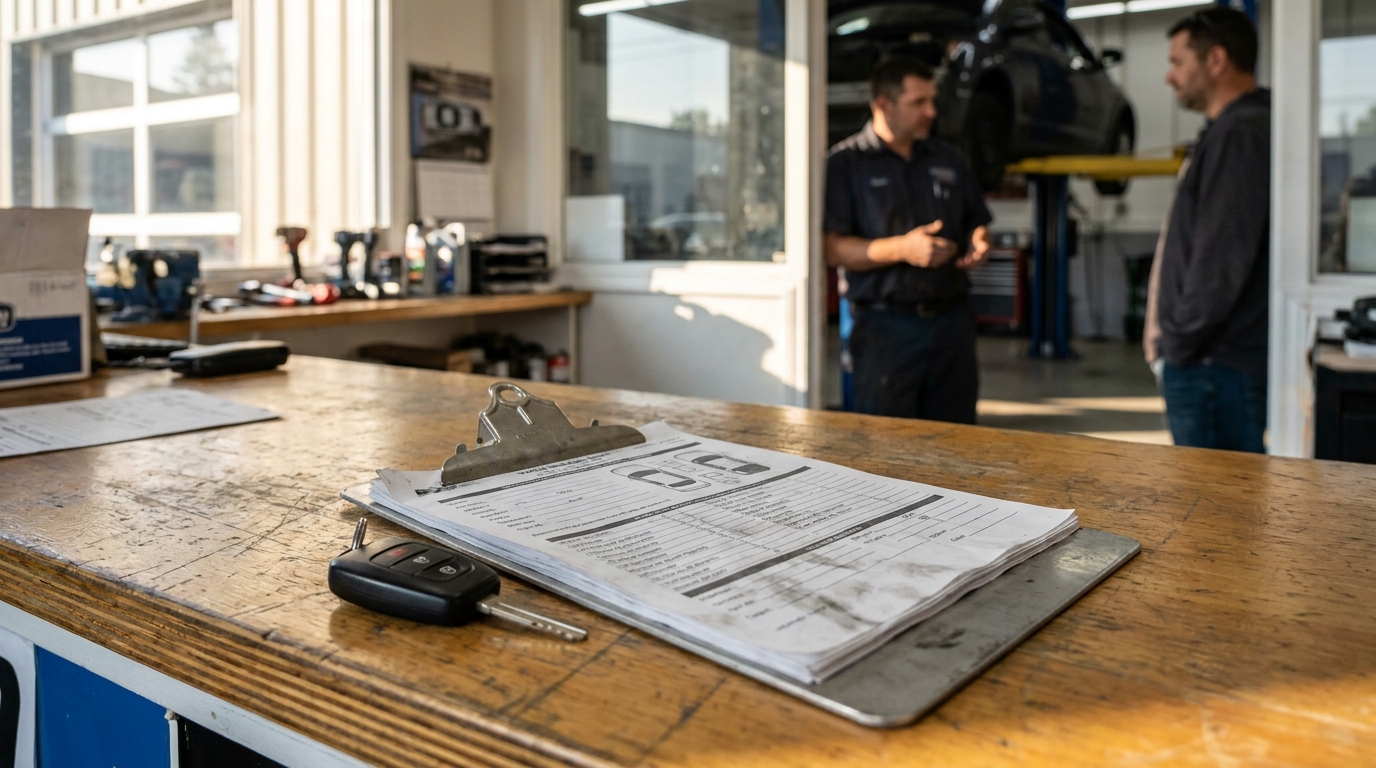
What Diminished Value Means in Illinois
Diminished value means the difference between your vehicle’s pre-crash worth and its post-repair worth. This concept appears in Illinois property damage discussions because a repaired vehicle carries marketplace stigma. Buyers view prior collision history as risk, even when repairs appear complete.
Compensation after a crash should address actual loss, not just visible damage. Illinois legislative findings in 625 ILCS 27/5 recognize that vehicle damage causes economic losses, including repair costs and lost use. While not a general diminished value statute, it reinforces that vehicle damage causes real economic harm under Illinois law.
The three common categories of value loss
Most diminished value discussions include three categories: inherent diminished value, repair-related diminished value, and immediate diminished value.
- Inherent diminished value: value lost because the car has a crash record
- Repair-related diminished value: value lost from incomplete or poor-quality repairs
- Immediate diminished value: the value difference right after the crash but before repairs
Each category matters depending on the facts. Aurora car crash vehicle value loss may be easier to prove when a late-model vehicle had no prior damage, received major structural repairs, and now brings lower trade-in or resale offers.
💡 Pro Tip: Keep the full repair file including estimates, supplements, parts invoices, and photos. Those materials help show whether loss is tied to accident history or repair-related issues.
A diminished value claim Illinois drivers should understand
A diminished value claim Illinois drivers pursue most often arises in third-party settings, though some ask about first-party claims under their own policies. A first-party claim is made against your insurer. A third-party claim is made against the at-fault driver’s insurer.
That distinction is important because legal duties and negotiation posture differ. Illinois allows recovery of property-damage losses against the at-fault side, and actions for injury to personal property carry a five-year limitations period. In third party diminished value Illinois disputes, the at-fault insurer may challenge value-loss evidence aggressively.
Illinois courts have drawn a sharp line between rights against the negligent driver and any duty owed by that driver’s insurer. In Martin v. State Farm Mutual Automobile Insurance Co., the appellate court explained that negotiations between a third-party claimant and defending insurer are arm’s length and adversarial, creating no duty of good faith and fair dealing.
Why insurer disclosure can be a problem
An insurance adjuster for the at-fault driver need not educate you about diminished value. The Martin court rejected claims that the insurer must disclose potential diminished value to third-party claimants, noting that no fiduciary relationship exists.
That does not mean diminished value disappears. The court indicated the negligent driver could still potentially remain liable for diminished value after the insurer settled the repair portion, depending on settlement terms and release language. That matters in Aurora IL collision damage claim disputes because a closed repair payment does not always answer every category of property loss.
For a broader overview of crash-related legal claims, this diminished value claim Illinois lawyer resource may help connect vehicle damage issues with the larger injury case. Many cases involve both personal injury and property damage, but deadlines, proof, and settlement strategy may differ.
How diminished value is calculated after a crash
There is no single Illinois formula controlling every diminished value dispute. Appraisals may use the 17c formula, a market-based comparison method, or an independent valuation approach. The best method depends on the vehicle’s age, pre-crash condition, mileage, repair history, and damage severity.
The 17c formula is commonly mentioned, but not the only measure. Market-based evidence may be more persuasive, particularly if comparable vehicles without accidents sell for materially more than similar vehicles with crash history.
| Method | What it looks at | When it may help |
|---|---|---|
| 17c formula | A standardized calculation model | When a quick baseline estimate is needed |
| Market-based approach | Comparable sales and listing data | When resale stigma is the main issue |
| Independent valuation | Appraiser review of condition and loss | When the claim is disputed or fact-heavy |
Quality of proof often matters more than the method label. Strong submissions include pre-accident photos, service records, clean title history, repair invoices, resale comparisons, and clear explanation of market discount.
💡 Pro Tip: Do not rely only on the insurance company’s initial number. If the vehicle was newer, high-end, or sustained significant damage, an independent valuation may provide a fuller picture.
Vehicles that often have stronger value-loss claims
Some vehicles present stronger diminished value arguments. That includes newer cars, luxury vehicles, low-mileage vehicles, and cars with no prior crash history. The more desirable the vehicle before collision, the easier to show measurable drop.
Older vehicles with high mileage may still have claims, but value-loss amount can be harder to prove. That does not invalidate the claim; it means evidence must connect the accident to real market price reduction.
Illinois timelines and legal authority that may affect your case
Deadlines matter because property damage and bodily injury do not necessarily run on the same clock. In Illinois, property damage actions carry a five-year limitations period under 735 ILCS 5/13-205. Personal injury claims carry a two-year limitations period under 735 ILCS 5/13-202.
That difference is easy to miss after a serious crash. Someone dealing with medical care, lost wages, and pain may focus on the injury case while overlooking the vehicle-value issue. Evaluating all loss categories early helps.
Illinois readers can review 625 ILCS 27 for legislative findings and vehicle-damage framework discussed above. Although that statute does not create a one-size-fits-all diminished value cause of action, it is relevant to how Illinois law recognizes economic harm from vehicle damage.
💡 Pro Tip: Create a timeline the week of the crash including collision date, repair dates, insurer communications, and settlement paperwork to prevent deadline problems.
What to do after an Aurora collision if you suspect value loss
Treat diminished value as a separate property-damage issue, not just part of the repair estimate. If your car was worth substantially more before the crash than after repairs, you need evidence targeted to resale impact. That is especially true in Aurora IL auto accidents involving newer vehicles or significant damage.
Steps that may help protect the claim
A careful, organized approach strengthens your position:
- Document the pre-loss condition with photos, maintenance records, mileage, and proof of upgrades
- Save all repair records including supplements, parts replacements, and frame or structural work
- Request a valuation explaining how the accident affected current market value
- Review settlement language closely before accepting property-damage payment
- Keep injury and property claims organized because they may move on different timelines
Readers who prefer Spanish-language information can review this page on the diminished value claim Illinois topic. That can be useful for Aurora families who want to compare terminology.
Understanding the limits of the insurance process helps. The Illinois appellate decision in Martin reminds that the other driver’s insurer negotiates from an adversarial position, not as your advisor. You must identify the claim, support it, and press it with evidence.
💡 Pro Tip: If the insurer says the repair payment resolved everything, ask whether diminished value was separately evaluated. A repair payment and vehicle-value loss payment are not the same thing.
Frequently Asked Questions
-
Is diminished value the same as repair cost?
No, diminished value differs from repair cost. Repair cost addresses what it takes to fix physical damage. Diminished value addresses marketplace worth after the crash history exists.
-
Can I make a third-party diminished value claim in Illinois?
Yes, a third-party diminished value Illinois claim may be pursued against the at-fault driver’s side as part of property-damage claims. Martin indicates the tort claim for diminished value is legally distinct from any alleged duty by the insurer to disclose it. Success depends on proof and any settlement release you signed.
-
Does Illinois law require the insurer to tell me about diminished value?
Generally no, not when you are a third-party claimant dealing with the at-fault driver’s insurer. The Illinois appellate court described those negotiations as arm’s length and adversarial. Claimants should not assume the insurer will identify every possible category of recovery.
-
How long do I have to file?
It depends on whether you are discussing property damage or personal injury. In Illinois, property-damage actions carry a five-year period under 735 ILCS 5/13-205, while personal injury claims carry a two-year period under 735 ILCS 5/13-202. Evaluate deadlines early.
-
What kind of proof helps an Aurora diminished value lawyer evaluate the case?
Useful proof includes before-and-after value evidence, repair invoices, photos, title history, mileage, and damage severity details. Market comparisons and independent valuations may also help. If the vehicle was newer or had strong pre-crash resale value, that context is especially important.
The bottom line for Aurora drivers dealing with vehicle value loss
A diminished value claim can be an important part of full compensation after a serious Aurora collision. Even after repairs, the market may still treat the vehicle as worth less, and Illinois authority supports the principle that vehicle damage causes real economic loss. However, the at-fault insurer need not point out that claim, so prompt documentation and careful review of settlement paperwork matter.
If you have questions about injury damages, property loss, or how an Aurora diminished value lawyer may approach the evidence, 844SeeMike (PI) is available to speak with you. Call 312-786-4442 or contact us now to discuss what happened after your crash in Aurora, IL.